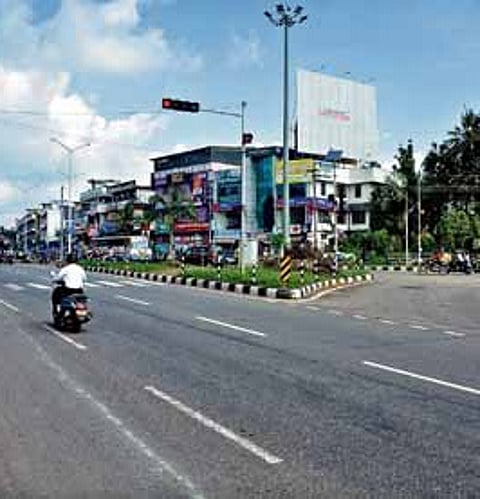

THIRUVANANTHAPURAM: There are two interesting tales on the origin of the name Pravachambalam. Folklore suggests that this little village near Nemom got the name from a gathering place — a shelter beneath an old tree filled with nests of pigeons (praavu in Malayalam).
Local people began to congregate here, finding refuge under the tree’s thick branches, giving birth to a place, a name, and a small piece of Thiruvananthapuram’s lore.
Sounds nice, but the story might not be factually accurate. Historian Vellanad Ramachandran explains that Pravachambalam doesn’t derive the name from a ‘pigeon shelter’ but instead traces back to a shelter created by a woman named Parvathi, affectionately known as Paru, from a prominent family.
Over time, Paru vacha ambalam (abode set up by Paru) evolved into Pravachambalam.
“This name is only about 200 years old. In those days, with the matrilineal system in place, authority within the family was held by the elder women. This is likely why a woman with the nickname Paru, known for her devotion, might have built this temple as a resting place for people. The word ambalam here refers to a shelter built with compassion,” notes Ramachandran.
Travel in those days was primarily on foot, in carts, or by palanquin. Ordinary people often travelled by foot, and these temples or shelters were constructed as resting halts for them along major routes.
Additionally, structures known as ‘athani’ were built for travellers to rest their loads. Goods were commonly transported either on the head, by bullock carts, or balanced weights carried on a sturdy bull, known as pothikala.
The athani often included stone troughs for the bulls to drink, allowing travellers to rest, water their animals, and continue their journey.
“The Pravachambalam route is significant — it connects Thiruvananthapuram to Kanyakumari,” Ramachandran adds.
“Before 1790, the capital of Travancore was at Kalkulam, now Padmanabhapuram. This administrative and spiritual centre was linked by a route called Narayana Peruvazhi — peruvazhi means a main road. Shelters, temples, and resting places along this route served as symbols of prosperity and grandeur.”
These wayside resting places often lent names to locations, like Ambalamukku or Ambalanada. In other cases, names like Ambalamukku or Ambalayal denoted places associated with temples dedicated to deity worship.
Another traditional structure for travellers was the thanneerpandal, where drinking water would be kept in a large earthen pot, along with seasonal fruits like salted mango, gooseberry or Indian plum.
“Though there are laws to protect heritage structures, a lack of practical application has led to the disappearance of wayside temples, load rests, water stations, and stone lamps,” rues Ramachandran.
