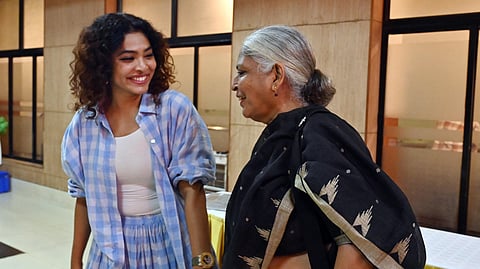

THIRUVANANTHAPURAM: “I have seen women go through this whole system, and I know that it is not in any way kind to these women,” said actor Rima Kallingal, expressing concern over the lack of institutional support for women in the film industry and in general. She was speaking at an event ‘Media at the crossroads: Independence vs Influence’ organised by the Network of Women in Media at Trivandrum Club on Saturday.
Rima said she often feels that existing systems do not genuinely care whether women receive justice and instead function as a display meant to project a forward-thinking and feminist image. She added that she rarely sees conscious involvement in understanding what women endure or in changing the status quo, though she continues to remain hopeful. Reflecting on the Women in Cinema Collective’s journey over the past eight to nine years, she described the work as emotionally exhausting but necessary.
The actor argued that the core problems lie within the film industry rather than in society at large. According to her, resistance comes from an industry uncomfortable with women who question entrenched practices and attempt to alter existing power structures. “For real change to happen, power and money need to change sides,” she said.
Producer Miriam Joseph pointed to denial of jobs, non-payment of wages and lack of credit for work as widespread problems in the film industry besides sexual harassment.
Calling the film industry “entirely unregulated,” Joseph said production companies and industry bodies, largely run by men, often operate above the law. Referring to a recent decision limiting crew work to 12 hours, she said the move was being celebrated despite workers previously being made to work 16 to 18 hours a day.
Film editor Bina Paul said that WCC is an advocacy group and cannot replace institutional mechanisms. While the collective supports survivors by directing them to the police and therapists, the absence of a structured system continues to be a major concern, she noted.
She also criticised the tendency to question survivors about delays in reporting incidents, saying this places the burden of proof on women and forces them to justify their experiences.
Author K R Meera was the chief guest and keynote speaker. Speaking at the event, she said that silencing minorities amounts to failing the promise of free speech, she said without free speech there can be no freedom of expression or worship, and without these there can be no equality or justice.
