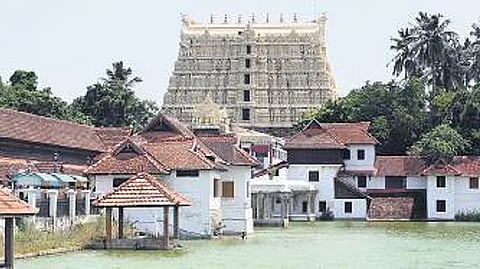

Thiruvananthapuram recently stepped into the international spotlight as the Agoda 2025 New Horizon Travel Trends report named the state capital as an emerging choice for international travellers to India. Notably, the district was placed ahead of routine favourites such as Goa, Udaipur, Agra and Jaipur.
For Indian travellers, however, Thiruvananthapuram has long been a popular destination, where tradition blends with urban ambition.
Visitors have always been drawn to its beaches, the tranquil haven of Poovar with the sea on one side and mountains on the other, the Padmanabhaswamy temple and other heritage structures.
Many have also been attracted by the capital’s strong wellness ecosystem — Ayurvedic centres, traditional kalari institutions run by hereditary gurus, and globally known residential yoga hubs such as the Sivananda Yoga Centre at Neyyar.

The fresh international attention comes at a politically significant moment as the Thiruvananthapuram corporation has witnessed a regime change, with a BJP-led administration taking charge amid rising expectations that the Centre, too, will step in to support the city’s growth.
Aligning with this sentiment, Mayor V V Rajesh emphasised in a recent City Dialogues interaction with TNIE that Thiruvananthapuram holds “immense potential” in spiritual and wellness tourism.
“We are drawing up plans based on this. It is not just the Padmanabhaswamy temple. We have a heritage base with several age-old shrines in beautiful and tranquil locations such as Azhimala and the Varkala Janardhanaswamy temple,” he notes.
“We also have strong roots in traditional medicine as well as ample avenues for modern medical support. All these could help us explore the spiritual and medical tourism prospects.”
A key addition to the city’s spiritual map has been the seaside shrine of Azhimala, which recently opened an underground cave temple.
Carved structures inside the cave here create an enigmatic spiritual aura, drawing hundreds of visitors every day.
“I was advised by my friend not to miss this,” says Smita Prakash, who took time off from a conference at Kovalam to visit Azhimala. “She told me it’s not just Kovalam, Padmanabhaswamy temple and Poovar — Azhimala, too, is a must-visit with its imposing Gangadhara Siva statue and the cave temple that juts into the sea almost like a hanging rock.”
According to Rahul Chandran, manager and project coordinator of the Azhimala cave temple, the footfall now averages around 5,000 visitors daily.
“The influx began when the Gangadhara statue was installed a few years ago. The cave temple and beach have added to Azhimala’s charm,” he says.
“Sea erosion at Shankhumukham has also diverted city-based visitors here, while better connectivity to Poovar and other destinations has encouraged tourist groups from outside the state.”
However, Rahul points to a glaring gap: there is no coordination or focal point where tourists can get proper orientation. “Right now, it’s mostly word of mouth or autorickshaw drivers earning small commissions,” he says.
Rahul adds that several beach shrines remain underexplored. “There are places like the Vizhinjam rock-cut temple, the Chitharal Jain temple, the Varkala Janardhanaswamy temple, and the Subramaniaswamy temple beyond Vellar,” he says.
Reji Syne, creative head of Mochita’s Moksha spiritual tour network, widens the canvas further. “The temples around the Fort area itself could form a circuit,” he says.
“There’s the Saptamathru shrine at Aruvikkara that juts into the river, Tiruvattar with its strong links to Padmanabhaswamy temple, and several other sites tied closely to the city’s history.”
What is missing, he points out, is a structured route map and coordinated effort. “Government thinking seems to have stopped with KSRTC’s budget tourism initiative linking Padmanabhaswamy, Attukal, Sreekanteswaram, Palayam and Vettucaud. Beyond that, it’s largely hearsay bringing tourists in,” he says.
This, he believes, is where the mayor’s recent statement holds promise — provided it is backed by serious deliberation. “Stakeholders must be involved,” he insists.
“Infrastructure, parking facilities and timing need careful planning. The canvas is vast and many sites are spread out and crowded, like the Thiruvallam Parasuramaswamy Temple.”
Alongside spirituality, wellness tourism also could be elevated to the next level. Thiruvananthapuram is home to institutions such as the Sivananda Yoga Centre, Agasthyam Kalari, CVN Kalari, Somatheeram, the Pankaja Kasthuri Ayurveda centre, and numerous smaller facilities where traditional medicine is practised.
“All these centres already host short-term and long-term programmes for tourists,” says Mahesh Gurukkal, fifth-generation teacher at Agasthyam Kalari.
“We have residential facilities for 40 people and practise the Thekkan Kalari system. We regularly host foreigners and people from across India.”
The capital’s super-specialty hospitals attract foreign patients seeking affordable, high-quality care. Yet, here again, coordination is lacking.
“Each hospital has its own International Patient Relations Department, and some receive patients from over 50 countries,” says Ajai Kumar, tour coordinator and member of Tourist Guides’ Federation of South India.
“What the government could do is streamline access by creating a coordinated platform. With organisations like Norka already in place, it should not be difficult.”
Freelance tour coordinators also welcome the mayor’s vision. “What we need is logistical and marketing support, not rigid sarkari patterns or guidelines. A balanced scheme will be great,” says Remya Mohan, whose clients are largely foreigners.
Thiruvananthapuram, then, presents a rare case where systems are already running across spiritual, wellness and medical tourism. What is missing is a concerted effort to link them through authorised information and coordinated planning.
“What needs to be seen,” Mahesh Gurukkal says, “is how the change will be implemented.”
For now, as Reji Syne puts it with a smile, it is a moment to “wait and watch” as hope rises along the capital’s shores.