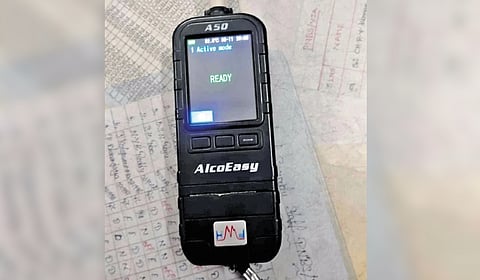

VIJAYAWADA: In a major step toward digital governance and technology-driven enforcement, the Andhra Pradesh State Road Transport Corporation (APSRTC) has replaced all analogue breath analysers with advanced digital devices across its 129 depots in 26 districts.
Until recently, APSRTC relied on analogue analysers to check bus drivers and staff for alcohol consumption before duty. These devices often produced approximate readings, leading to inconsistencies, especially during busy hours at large depots. The new digital analysers, however, offer precise results, timestamped records, and the potential for server-based integration to ensure greater transparency and accountability.
“Analogue analysers are now a thing of the past. Every depot is equipped with digital systems that deliver accurate, auditable results. Any employee found under the influence of alcohol will face immediate departmental action,” APSRTC Vice-Chairman and Managing Director Ch Dwaraka Tirumala Rao told TNIE.
The upgrade, he noted, is vital for a corporation that transports nearly 40 lakh passengers daily, covering around 40 lakh kilometres across the State.
Alcohol screening is mandatory for every driver and staff member before duty, as even residual traces from the previous day can impair judgment, something the new devices can detect with far greater precision.
The initiative comes amid concerning accident statistics. In 2024, 162 RTC-related accidents claimed 89 lives and left 330 injured. In 2025 so far, 148 accidents have resulted in 74 deaths and 375 injuries. APSRTC’s current fleet stands at nearly 14,000 buses, including hire services.
“Passenger safety remains our top priority. Replacing analogue analysers with digital ones reflects our zero-tolerance approach to risk,” Rao emphasised.
The corporation also plans to integrate the depot-level data with APSRTC’s central command system to identify trends and flag repeat offenders—marking a key move toward a safer, smarter, and more accountable public transport ecosystem in AP.