
Did you know that some of India’s most important battles for freedom were fought not only on the streets, but also inside colonial courtrooms within a legal system controlled by the British? These trials stirred public emotions, exposed how colonial power worked, and in many cases, even accelerated the freedom movement. However, many of these stories remain scattered in archives.
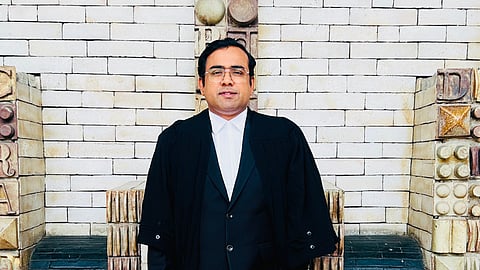
In Freedom On Trial (Rupa Publications), advocate and author Akash Vajpai brings a compilation of 12 such important pre-independence trials, presenting them in a simple and engaging way.
While speaking with TMS, Vajpai says the idea for the book came from a 2022 conversation with Ashok Mehta, a former Additional Solicitor General at the Allahabad High Court, who suggested compiling key trials from the freedom movement into a single volume, noting the absence of any one book that brought them all together.
History made accessible
It took the author around six months to collect records, many of which are now also available through digital archives.
The book includes trials of major revolutionaries of the Indian independence struggle, such as Mahatma Gandhi, Bhagat Singh, Vinayak Damodar Savarkar, Udham Singh and Madan Lal Dhingra. Vajpai notes that many of these trials went unnoticed for two reasons — complicated legal jargon and a dearth of records.

In this book, instead of interpreting these cases as complicated legal texts that most people often find difficult to comprehend, Vajpai assembles them as simple stories. The narrative of the text is, hence, engaging and accessible, making complex legal histories easy to follow; additionally, each case is laid out with clarity, breaking down the key arguments, context and outcomes without overwhelming detail.
Further speaking of the process of writing Freedom On Trial, the author says that one of the most surprising parts of his research was the impact of the Indian National Army (INA) trials held at the Red Fort in 1945. These trials involved soldiers who had joined the INA under leaders like Subhas Chandra Bose after the Second World War.
The venue, too, had a history of its own, having been the site where Mughal emperor Bahadur Shah Zafar was tried by the British for his role in the 1857 Revolt. The book notes that in 1945, through the INA trials, the British sought to send a similar message — that any act of treason would be met with the severest punishment.
The British intended to make an example of the accused, Vajpai explains, but the trials ultimately produced the opposite effect. Sharp and persuasive defence arguments by lawyers such as Bhulabhai Desai contributed to the acquittal of the INA officers, while the proceedings sparked widespread public support across the country. “The pressure became so strong that the British could not punish them as planned,” he adds. In his view, this significantly weakened British control, particularly at a time when Britain was already strained by the aftermath of World War II.
Law and order
The book also reflects on how the colonial legal system was often reshaped to serve political ends. Vajpai points to the Lahore Conspiracy Case involving Bhagat Singh, Sukhdev Thapar, Shivaram Rajguru, and several others, where a special tribunal was created through an ordinance to fast-track the proceedings, effectively stripping away the right to appeal.
Along with recounting historical events, Vajpai sys the book aims to prompt readers to reflect on the sacrifices made by freedom fighters. He adds that this is precisely why such trials deserve a place in legal education. “We study many post-independence judgments in law schools, but not the trials that shaped our constitutional values. These cases influenced the checks and balances we have today,” he says, highlighting the need to include them in academic curricula.