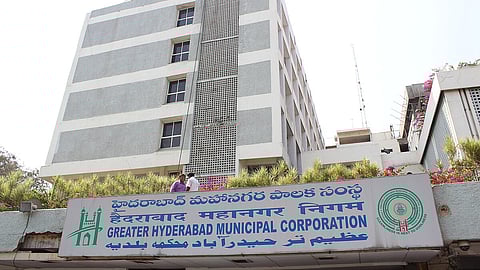

The Telangana government’s decision to fold 20 municipalities and seven municipal corporations into the Greater Hyderabad Municipal Corporation (GHMC), expanding its jurisdiction from 625 sq km to nearly 2,000 sq km, represents a significant recasting of urban governance. The GHMC is now the country’s largest municipality by area. The real question is whether this restructuring can correct Hyderabad’s persistent problems of uneven development, regulatory inconsistency, and overstretched civic services that have long undermined the city’s growth.
For years, the fragmented jurisdictions surrounding the Outer Ring Road have struggled with potholed roads, unreliable water supply, sanitation gaps, congestion, and mounting environmental stress. These shortcomings have been particularly acute for peri-urban residents who have remained underserved despite rapid population growth. A single, enlarged GHMC offers the possibility of coherent master planning, better transport networks, stronger pollution control mechanisms, and more rational resource mobilisation. The civic body’s ₹8,440-crore budget for 2025-26 will need to cross ₹10,000 crore next year to serve an expanded population of about 1.6 crore. The additional fiscal heft could accelerate the 23 priority projects under the Hyderabad City Innovative and Transformative Infrastructure initiative and advance the broader Telangana Core Urban Region vision extending across Hyderabad, Rangareddy, Medchal-Malkajgiri, and Sangareddy districts.
Execution, however, will determine whether the merger fulfils its promise. Centralisation has always had its sceptics. Some argue that a larger, more distant civic authority could marginalise residents living far from the urban core and even heighten corruption in a more sprawling bureaucracy. Others maintain that only a consolidated institution can attract investment, deploy resources efficiently, and balance development across an expanding metropolis. With the merger now a fait accompli, the immediate tasks are evident: fair ward delimitation, a tax framework that does not place disproportionate burdens on any region, and a substantial augmentation of GHMC’s administrative and technical staff.
Predictably, the political dimension has surfaced quickly. The BJP has accused the Congress government of pursuing the merger with electoral calculations in mind, hoping to gain ground before the GHMC elections next year. Such allegations will continue. Ultimately, the credibility test lies in whether the enlarged GHMC can deliver equitable, effective governance to a megapolis that has long outgrown its institutional capacity.
For Hyderabad, the merger must become more than an administrative exercise. It must anchor a long-term commitment to planned growth, resilient infrastructure and civic equity across the entire metropolitan region today.