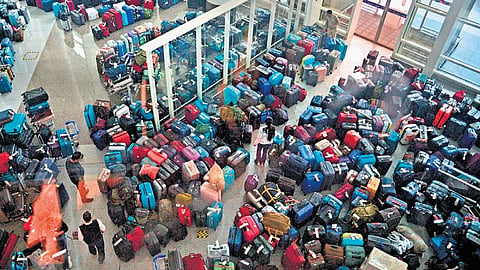

An airline that carries almost two-thirds of India’s domestic passengers has thrown the plans of lakhs of Indians off course for nearly a week. And the return to normalcy is still not in sight. The IndiGo mess is not just about a low-cost carrier sticking to its high-margin model. It is about a market leader that failed to prepare and about regulators who did not see trouble building up until it spilled over into the public domain.
The government relaxed the flying-time norms meant to reduce pilot fatigue only after the crisis became unmanageable. IndiGo had known for more than a year that the Directorate General of Civil Aviation’s revised flight-duty limits would come into effect on November 1. Yet it claimed to be blindsided. The fallout was more than 2,000 cancelled flights, long queues at airports, and passengers stranded for up to 36 hours. When the largest player in the market says it cannot cope, it raises uncomfortable questions about basic operational planning that cannot be brushed aside.
This crisis did not arrive overnight. The immediate trigger was an Airbus advisory that required A320 aircraft to update their flight-management systems. Newer planes needed a simple software patch, while older aircraft required hardware changes. That set off the first round of delays and cancellations. A seasonal surge in travel and an expanded schedule stretched the system further. IndiGo continued to push new routes—26 of them this financial year—without adding enough pilots and co-pilots. When the new duty-time norms kicked in, the network simply buckled, exposing long-standing cracks.
The government acted only after lakhs of citizens had a miserable weekend. It moved to cap ticket prices, ordered quick refunds and baggage returns for IndiGo passengers, and set up a central monitoring cell. When the matter reached the Supreme Court, Chief Justice Surya Kant noted that many stranded passengers may even need medical attention, underlining the human cost of the chaos.
Such an operational failure cannot be glossed over. Accountability is needed, both from IndiGo and from the DGCA. The episode is also a warning about the dangers of an aviation market where one airline is overwhelmingly dominant. India has seen too many carriers collapse, leaving just two major players to carry the load of nationwide connectivity. That must change. So must the cost structures, regulatory vigilance, and lopsided market forces that have repeatedly held back Indian aviation.
