
A better session, but law making rushed
The just-ended session of Parliament was reasonably productive and suggested a measure of maturity among elected representatives, especially after the near washout of the previous monsoon sitting. While tempers ran high on both sides, there was a noticeable willingness from the Chair and the treasury benches to accommodate differing views—a quality conspicuously absent earlier. Last session, the Opposition’s demand for a debate on the Election Commission’s special intensive revision (SIR) of electoral rolls in Bihar had been flatly rejected, triggering repeated disruptions. This time, however, the government agreed to recast the issue as a wider discussion on electoral reforms. That semantic adjustment created space to raise concerns over SIR and alleged vote manipulation. The government, for its part, held firm on sequencing—insisting first on a debate marking 150 years of Vande Mataram before turning to electoral issues. The Opposition gave way, resulting in a mutually acceptable compromise.
A closer look, however, reveals that over 40 per cent of the already brief session—just 19 days with 15 sittings—was devoted to non-legislative discussions. Even so, the passage of eight Bills, several of them significant, was no small feat. These included legislation to replace the two-decade-old MGNREGA framework, open the civil nuclear sector to private participation, and permit 100 per cent FDI in insurance. Yet many of these Bills were pushed through within a couple of days of being introduced, some amid protests and high drama, with repeated demands for committee scrutiny brushed aside. This has prompted observers to question whether legislative efficiency is more desirable than the depth and quality of debate. The handling of the VB-G Ram G Bill illustrates the concern: the Rajya Sabha took it up just hours after the Lok Sabha passed it on the penultimate day, denying the Opposition additional time for examination.
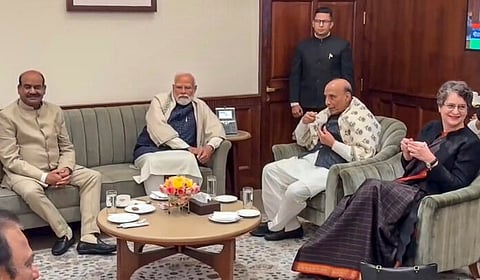
Overall, the Opposition appeared to recognise a shift in tone by attending the Speaker’s customary post-session tea—a gesture it had shunned since the 2024 monsoon session, citing lack of opportunity to speak. That said, a proposed debate on pollution was dropped, with the ruling side citing the Congress’s conduct in the Lok Sabha. And on a different note, is it unreasonable to expect senior political leaders to remain in the country—and present in Parliament—while the House is in session?