
Protect the rights of all communities
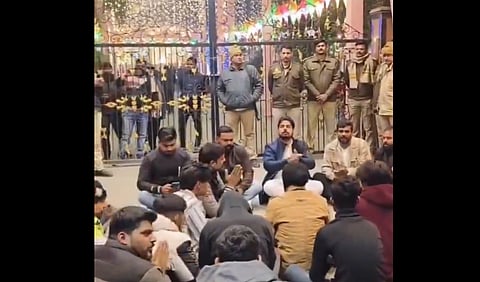
A spate of attacks and disruptions targeting Christmas celebrations and Christian gatherings in some parts of the country has raised serious concerns, coming as it does at a time when the ruling NDA is seeking to engage with the community. Church bodies including the Catholic Bishops Conference of India have spoken out, urging authorities to act decisively to protect believers. They point to more than 1,500 incidents of anti-Christian violence in 2024-25, marking a steep rise over the past decade. Many recent cases have been reported from Uttar Pradesh, Madhya Pradesh, Odisha and Chhattisgarh. There is little evidence to suggest these incidents reflect the views of the wider population; they appear to be driven by fringe, rabble-rousing elements. Human rights organisations warn, however, that repeated inaction risks allowing intimidation to harden into a pattern.
The issue has also acquired political salience. In Kerala, where assembly elections are due in a few months, the BJP appears uncertain in its approach towards the Christian community, which accounts for about 18 per cent of the population. The Congress, meanwhile, has moved quickly to foreground incidents from BJP-ruled states. Electoral calculations aside, the larger concern is whether governments are responding with the seriousness that threats to public order and religious freedom demand.
At the national level, the BJP leadership has in recent years made visible efforts to reach out to Christian leaders and institutions. Those gestures, however, ring hollow if violence, harassment and disruption of worship are not met with swift and unambiguous action on the ground. Whatever disagreements may exist over religious practice, there can be no justification for preventing a community from observing its festivals or creating an atmosphere of fear around places of worship. Law and order is not a matter of interpretation; it is a core responsibility of the state.
Christians constitute a small minority in India despite a presence in the subcontinent extending back nearly two millenniums. That historical rootedness and their demographic vulnerability place a particular obligation on the State to act without hesitation or bias. Protecting citizens and their right to practise their faith peacefully is not a concession, but a constitutional duty. The Constitution guarantees freedom of religion and equal protection of the law. Upholding these guarantees, especially when tested, is essential to preserving the credibility of democratic governance. A clear, firm response is necessary—not to privilege one community, but to reaffirm that intimidation and violence have no place in a constitutional republic.