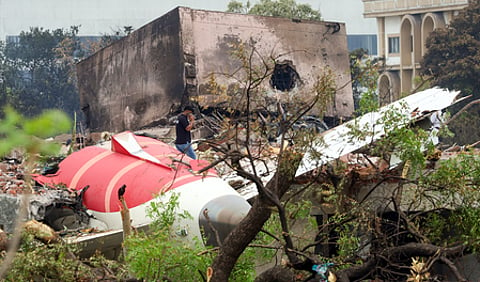

India's Aircraft Accident Investigation Bureau (AAIB) burnt midnight oil to release a 15-page preliminary report on the Air India flight 171 crash that killed 260 people in Ahmedabad on June 12. The rush was for sticking to the International Civil Aviation Organization’s deadline of submitting an initial probe report within 30 days. That the plane decelerated seconds after takeoff is well known. The report reveals the first engine’s fuel switch was transitioned from run to cut-off three seconds after being airborne; and the other one a second later. The retrieved cockpit voice recorder’s audio shows one pilot asking the other why he shut them off, to which the other says he did not. They then scrambled to fire up both engines; the first revved up while the other struggled—but it was all too late.
The report led to a fierce pushback from the Indian pilots’ association, which suspected calumny while sections of Western media had started speculating on confusion in the cockpit, inferring pilot error. The AAIB, too, appeared to indicate it without explicitly saying so, as its report was open-ended. It begged the question: why did it share just two paraphrased sentences the pilots exchanged and not the full conversation?
Here are some other questions. First officer Clive Kunder, 32, was flying the aircraft, while pilot-in-command Sumeet Sabharwal, 56, was monitoring it. Which of them asked the other why he shut the fuel switches? The first switch was off at 1.38.42 pm. Switching it on ought to have been a reflex action. Why did it take the pilots 10 seconds to do so? Why was fuel to the second engine switched on four seconds after the first and not simultaneously? While the first engine developed thrust after fuel was restored, the second struggled—why? The US’s Federal Aviation Administration had flagged potential disengagements of Boeing’s fuel switch locking feature way back in 2018. When was this craft’s fuel switches last serviced? The AAIB must put out the full transcript of the fateful flight’s recordings to dispel suspicion that the preliminary probe report was meant to frame the pilots, who tragically are incapable of defending themselves. Though the final report may take a year, full transparency even at this stage can give some closure to the families of the victims.
