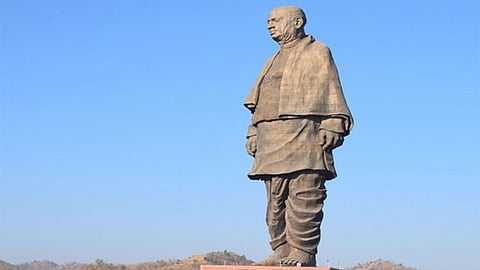

The Supreme Court’s refusal to allow the Tamil Nadu government to install a statue of former Chief Minister M Karunanidhi in Tirunelveli is not just a local setback. It exposes a persistent national malaise: ruling parties often treat leaders’ monuments as their legacy, and as symbols of development and public welfare. From the sprawling elephant parks commissioned by Mayawati in Uttar Pradesh to Gujarat’s colossal Statue of Unity, and countless arches, domes, and memorials erected for Nehru, Ambedkar, Shivaji, or regional icons, the pattern is familiar. Every ruling party, irrespective of ideology, succumbs to the politics of perceived permanence. The criticism here is not about cultural monuments or works of art, but specifically about statues and memorials to political leaders—whether crowd-funded or, more troublingly, built with public money. The justification is couched in noble words—honouring leaders, preserving history—but the reality is that statues are instruments of political branding, designed to etch a ruling dispensation’s imprint on public space.
The real tragedy is in the opportunity cost. Parties in power prefer the certainty of marble over the challenge of building lasting welfare such as schools that educate generations, hospitals that save lives, or clean water systems that ease daily burdens. The tendency is not confined to statues alone. The naming of roads, airports, universities, and welfare schemes after political leaders—an entrenched practice since independence—reflects the same impulse. Like statues, these names perpetuate personality cults, distracting from the institutions’ real purpose and the citizens they serve.
Courts and institutions have tried, with mixed success, to temper this tendency. National parties criticise regional ones for “statue mania”, but engage in the same practices themselves. To blunt criticism, some even hide behind the images of gods or widely respected national figures. The Madras High Court has suggested ‘leaders’ parks’ to contain statues without obstructing civic life. The Election Commission once directed that statues of Mayawati and the party symbol, the elephant, be covered during campaigns to avoid influencing voters. Mayawati herself once dismissed the notion that statues should only be built posthumously, underscoring how deeply political calculations influence such projects. A country still grappling with poverty, unemployment, and poor infrastructure cannot afford the luxury of the politics of monuments. Remembering leaders is important, but the truest memorial is improving everyday lives.