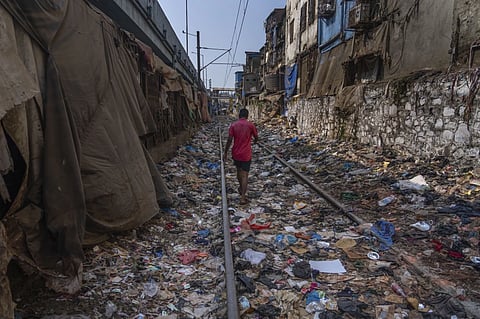

A study published in Lancet Planetary Health has warned of plastic pollution’s effects doubling by 2040. India, the world’s most populated country, has been estimated to contribute about 20 percent of global plastic emissions. This can increase the country’s health burden, worsen aquatic contamination, contribute to climate change and damage terrestrial ecosystems.
While India annually generates about 93 lakh tonnes of plastic waste, the biggest culprits in the emission trail have been primary plastic producers, unmanaged waste, poor collection segregation and disposal, open burning and widespread lack of awareness. Of the bulk plastic waste, about 58 lakh tonnes are burned and the rest re-enters the environment as waste, causing extensive land and water pollution. It is estimated that half of this consists of single-use plastics—packaging, water bottles and sachets—while only about 12 percent is recycled and 70 percent dumped in landfills or is strewn around. About 80 percent of marine pollution is caused by plastic, which releases toxic chemicals like bisphenol A and antimony. It breaks down into microplastics, entering the food chain, soil and water, reducing soil fertility, inhibiting plant growth and affecting the crucial process of photosynthesis.
Plastic severely impacts human health throughout its lifecycle, causing diseases, developmental issues and chronic conditions due to toxic exposure. Accumulation of chemicals like bisphenol A, phthalates and polyfluoroalkyl substances in the human body through ingestion or inhalation is linked to cancers, infertility, diabetes, immune suppression and cardiovascular diseases. India’s disease burden linked to plastic-associated chemicals in 2025 alone was estimated at a staggering ₹25,000 crore in terms of healthcare expenses, productivity loss and premature deaths.
This calls for urgent attention from the central and state governments in mitigating the threat and minimising its impact on the country’s environment and public health. India’s Plastic Waste Management Rules, 2016 was amended seven times to tighten the regulations curbing plastic pollution. The India Plastics Pact of 2021, anchored by the Confederation of Indian Industry, aimed at creating a circular economy for plastics, eliminating unnecessary use, promoting reusability and recyclability, and strengthening waste management. But widespread lack of public awareness has blunted the efforts. India needs a bottom-up effort to ensure that the country’s future is not compromised by this growing scourge.
