
The announcement of an India-US trade deal and a sharp cut in American tariffs has delivered a timely boost to markets and exporters. After nearly a year of bruising trade tensions that pushed bilateral ties to their weakest point in two decades, the political signal to reset economic relations is significant. For India, the US remains its largest export destination, making a prolonged confrontation costly. While diversification is both necessary and desirable, shifting export dependence away from the US at scale is a long-term endeavour, not a viable near-term alternative to stabilising trade flows.
Against this backdrop, President Donald Trump’s declaration on social media that tariffs on Indian goods would be cut from 50 percent to 18 percent assumes importance. The earlier level was among the highest imposed by the US on any major trading partner, and its rollback can offer immediate relief to labour-intensive sectors that have been under severe pressure. Textile, leather, footwear and engineering goods companies have already responded positively.
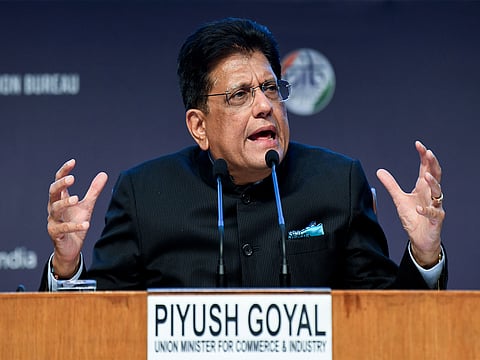
At the same time, the unconventional mode of announcement and the absence of detailed documentation leave important questions unanswered. While sharing details from the Indian side, Commerce Minister Piyush Goyal was deliberately cautious, signalling that discussions are in the “final stages” and specifics would be shared soon. This contrast need not reflect disagreement, but may simply point to differing negotiating styles.
Clarity is essential on both the structure of the deal and India’s energy commitments. Claims that India will halt Russian oil imports and pivot to American and Venezuelan crude remain unconfirmed. With Russian oil accounting for a substantial share of India’s imports, and alternatives posing cost, logistics and refining challenges, any shift would have to be gradual and pragmatic. Russia is also India’s most reliable veto-holder at the UN; unsettling Moscow would carry diplomatic costs that cannot be ignored.
Equally important is reciprocity. While the government has assured protection for sensitive agricultural and dairy sectors, details on tariff concessions, investment pledges and purchase commitments are still awaited. Such caution is justified. Trade agreements of this scale require precision and balance, not haste. Seen in this perspective, the deal offers a constructive pause after a difficult phase. Combined with the India-EU trade pact and targeted support announced in the Union Budget, lower US tariffs could improve India’s competitiveness and help anchor a more stable trade framework that balances economic gains with strategic autonomy.