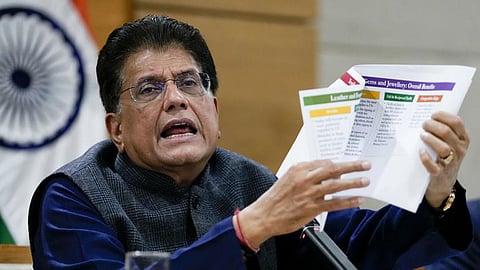

The India-US ‘framework for an interim agreement’— an initial step towards a bilateral trade pact—signals a welcome reduction in tariffs on Indian exports to the world’s largest market. The reciprocal impost of 25 percent will be reduced to 18 percent, pricing Indian goods such as textiles, leather items, chemicals, rubber and plastics competitively for American importers. These goods not only account for the bulk of our exports, but they are also produced by lakhs of smaller enterprises that form the country’s foundation for manufacturing jobs. The extra 25 percent imposed as a punitive tariff for buying Russian oil has been rescinded.
On its part, India will eliminate or reduce tariffs on US industrial goods, food and farm products including animal feed, tree nuts and fresh and processed fruits. It has also committed to buying over five years $500 billion worth of US energy, aircraft, and technology products, precious metals and coal. The pricier segments of the competitive automobile market may face increased competition as Indian consumers get more choice at softer prices. Importantly, the announcements have given a much-needed boost to the stock markets and investor confidence.
Afforded a partial view of the emerging deal, the terms seem to be tilted towards the US. Commerce Minister Piyush Goyal has gone to great lengths to assure Indian farmers that most agri products including rice, wheat and dairy will be ring-fenced. The decision to fix import quotas for soyoil and extra-long staple cotton, and a price floor for apples would protect a section of farmers. However, with the joint communiqué stating that tariffs will be eliminated or reduced on a “wide range of US food and agricultural products”, it’s not clear whether the window on the subject has been closed. The condition of reduced Indian import of Russian crude is also not fully clarified. The deal should not take away India’s right to decide on its strategic interests, which the government has carefully asserted. Finally, to spend $100 billion a year on American products, we will have to double our imports from the US, wiping out our trade surplus and putting pressure on the rupee. While the fine print of the deal is being thrashed out, the government must ensure there is no shadow of doubt on our sovereign interests.
