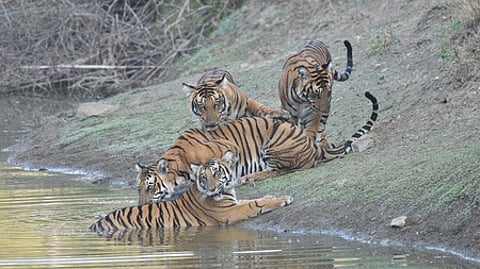

Caught on a cleft stick between lives and livelihood, and under pressure from the ecotourism lobby, Karnataka has restarted jungle safaris in the Bandipur-Nagarahole range in a phased manner. The government had banned safaris last November after three forest dwellers were killed by tigers within a month and a spike in human-animal conflict involving leopards and elephants in the region. The ban was clamped on the Mysuru-Chamarajanagar belt to calm panic among locals. Trapping and relocating 25 tigers and cubs, and strict restrictions helped bring down animal attacks to zero. It has now opted for a cautious approach, with curbs on the type of vehicles allowed and hours spent in the forest.
Reopening safari tourism would mean walking a tightrope. The government will have to consider disturbed wildlife habitats and upended routines of locals, as also the 8,000-odd jobs dependent on ecotourism in the region. Incomes have dried up and protests have broken out. The losses have been heavy, with some stakeholders claiming a loss of ₹400 crore over the yearend holidays; resorts and associated businesses are unwilling to lose out on the summer holiday season coming up. Bookings have fallen by more than half, with several tourists opting for Masinagudi in Tamil Nadu and Wayanad in Kerala.
With Bandipur and Nagarahole located at a convenient 220-240 km from Bengaluru, safaris had become a favourite for weekend tourists. With vehicles roaming the ranges freely, ecotourism had become akin to an invasion of wildlife habitats. The government appears to be taking the right step forward by trimming the number of vehicles and hours, and deploying at least half the staffers on patrol along the forest borders. Tourists claim that safaris help alert foresters about animals caught in traps or lying injured after a clash. It is also argued that Karnataka uses only 10 percent of its forest area for tourism, though the Supreme Court has permitted using 20 percent. It should be kept in mind that these forests are home to 303 tigers—three-quarters of the state’s population—besides around 2,000 elephants, numerous leopards and other fauna. When it comes to matters of ecology, it is best to adopt the live and let live policy, and take the middle path of sustainable tourism to minimise man-animal conflict.
