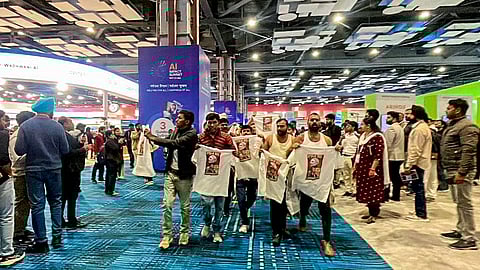

A disproportionate display of State power has followed a distasteful display of dissent. When a group of Youth Congress workers took off their tshirts at the AI Impact Summit in Delhi last week to protest against the India-US trade deal, they disrupted an international event at which even some Congress leaders were eagerly courting capital and technology. The Delhi police slapped charges of criminal conspiracy, hurting a public servant, disobedience of public order and unlawful assembly on the four Youth Congress workers arrested; a fifth was booked later outside Delhi. But while seeking an extension of their police custody on Tuesday, when they added the more serious charges of rioting and provoking others to riot, the administration overreacted, turning what should have been a slap on the wrist for an embarrassing disruption into a muzzling of political dissent.
At a time when the space for protest is being cramped by governments and it’s difficult to be heard above the daily din of social media rage-baiting, it’s only fair to be creative with the mode of protest. But a sense of proportion and place can be asked of the principal national opposition party. They could have drawn attention by hosting a parallel conclave or using technology to project their dissatisfaction. On the other hand, if the government keeps reducing the space for exercising the constitutional right to protest, it can hardly blame the other side for colouring outside the drawn lines; they did, and still do, much the same when on the opposition benches.
In the middle, the era-definining transformation and anxiety brought about by artificial intelligence—which participants and visitors thronged the summit to discuss and understand—slipped from the top of the headlines. It was as if both political parties were addressing their own domestic constituencies at an international event attended by the top leaders of more than a dozen countries and chief executives of more than a hundred companies. While the ruling party’s ministers were busy singing panegyrics to their leadership’s vision for the technology, those from the opposition were pointing away from AI. In their attempts to shine a light on themselves, our politicians let this unique opportunity pass without the common Indian understanding the far-reaching impact of AI in a clearer manner. And that could yet turn out to be a debilitating lacuna.