
Isro failure to dent its commercial aspirations
After a satellite launch failed last May, former chairman of the Indian Space Research Organisation (Isro), S Somanath, had said, “Failure is never a defeat, but rather a formidable tutor.” This Monday morning, when another launch mission recorded the space agency’s second consecutive failure in the polar satellite launch vehicle (PSLV) series on its 64th flight, those words invite uncomfortable scrutiny.
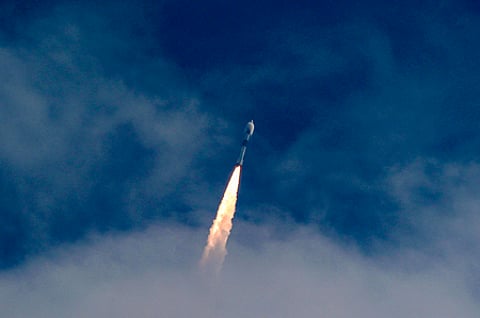
After lifting off from the Satish Dhawan Space Centre in Sriharikota, the PSLV-C62 rocket, carrying 16 satellites, encountered disturbances near the end of the third propulsion stage, causing a deviation from the planned trajectory and preventing it from reaching the intended altitude of 512 km. All 16 satellites were lost—including Isro’s primary Earth observation satellite, EOS-N1, and 15 others belonging to foreign and domestic customers, largely private start-ups.
The failure of the previous PSLV mission had also occurred during the third of the four propulsion stages, reportedly due to a loss of pressure in the motor casing. Only on two previous occasions in the PSLV programme’s 32-year history have consecutive launches failed—in September 1993 and August 2017. This episode, however, ranks among the most consequential setbacks because of the scale and diversity of customer payloads lost. The shock is heightened by the PSLV’s otherwise stellar record. Widely regarded as Isro’s workhorse, the vehicle has delivered landmark missions such as Chandrayaan-1, the Mars Orbiter, Aditya-L1 and Astrosat, and set a world record in February 2017 when PSLV-C37 placed 104 satellites into orbit in a single launch.
Back-to-back failures inevitably dent Isro’s reputation for reliability and raise concerns about its commercial launch ambitions. The fallout could be damaging for NewSpace India, Isro’s commercial arm. While Isro’s launch services typically cost about two-fifths less than those of rival agencies, higher insurance premiums could erode this advantage. For several domestic start-ups, the blow is sharper, as some payloads are believed to have had limited or no insurance coverage.
Isro must now pull up its socks. A rigorous and transparent failure analysis is essential to prevent recurrence, along with the need to evolve a stronger insurance and risk-mitigation framework for customer satellites. Reliability remains the cornerstone of India’s ambitious space roadmap to expand commercial launch services and achieve self-reliance in critical space technologies. In that pursuit, quality and diligence cannot be compromised.