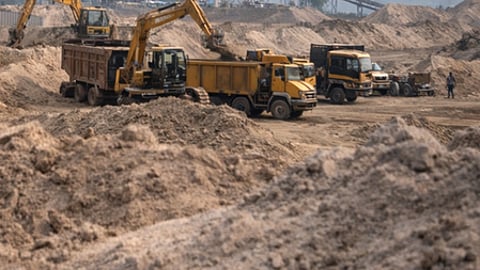

The Enforcement Directorate’s crackdown has laid bare the dark underbelly of sand smuggling in Odisha. Beyond political patronage, money laundering and funding of illegal enterprises, the investigation has exposed systemic failures that allow the racket to thrive. Acting on a Comptroller and Auditor General report, the ED raided over two dozen locations in Ganjam district. The findings were damning: cash and properties worth crores, forcible takeover of leases from legitimate holders, and mining carried out in brazen violation of norms. Ganjam is no exception; the pattern is replicated across the state.
With demand soaring, the illegal trade has flourished unchecked. In the latest case, operators were illegally ferrying sand from Odisha to Andhra Pradesh, with part of the proceeds allegedly diverted into an illicit liquor business—underscoring how deeply entrenched and diversified the network has become.
This exposé is merely the tip of the iceberg, given the scale of river sand plunder across Odisha. At the heart of the problem lies a nexus between the mafia and the powers that be—bureaucrats, politicians and sections of the police. The audit flagged how revenue officials routinely looked the other way when statutory clearances were bypassed. More often than not, the administration retreats into silence after token raids, reinforcing suspicions of a protected racket.
To its credit, the state government has announced amendments to the Odisha Minor Mineral Concession Rules, 2016, including an e-lottery system. A proposal to fix a minimum support price for sand to break leaseholder monopolies is also under consideration. These steps, though welcome, will remain cosmetic unless backed by rigorous enforcement and sustained political will.
What must ultimately drive the government is the grave threat sand smuggling poses to Odisha’s rivers. Mineral smugglers have grown so emboldened that they attack officials who stand in their way. If the government is serious about dismantling the mafia, it must go after the nexus that sustains it rather than settle for performative action. It must also heed the Supreme Court ruling barring riverbed mining without scientific assessment of sand replenishment and incorporate this mandate into district survey reports—the basis of mining permissions.