
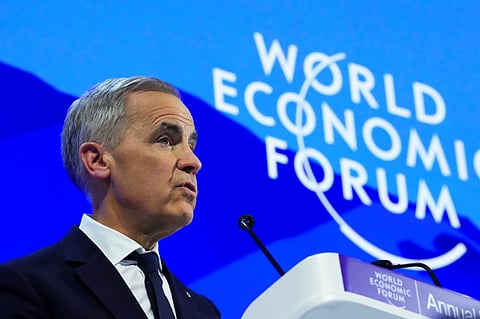
World declares death of old economic order, but the new one is unborn
The just-concluded World Economic Forum at Davos drove home a bitter truth. That globalisation has failed us all, and the world no longer relies and operates on the rules-based international order that once promised shared prosperity. From Asia to Europe, leaders asserted that we are witnessing a permanent shift and economies are caught unprepared. As Mohammed bin Abdulrahman Al Thani of Qatar observed, the checks and balances put in place following the Second World War are now gone. Echoing the sentiment, Singapore’s Tharman Shanmugaratnam recalled how we are witnessing an erosion of the norms, conventions and trust built over 80 years, reinforcing the decline into disorder. Speaking for Europe, Ursula von der Leyen cautioned that the world can capitalise on the opportunity only if it recognises that this change is irreversible.
The most notable commentary came from Canada and the US. If Canada’s Prime Minister Mark Carney characterised the moment as a rupture, and not a transition, US Commerce Secretary Howard Lutnick concluded that globalisation has failed as policy. Their views on the beneficiaries, however, differed starkly. Carney stressed that free-trade globalisation under US leadership never really offered win-win outcomes for other countries. Instead, the arrangement favoured American corporations and banks, and like-minded capitalists elsewhere. But since this bargain no longer works, he urged economies to adapt to a world in which US capitalism no longer offers predictable leadership. Lutnick, on the other hand, played victim of US policies, reasoning that globalisation, free trade and offshoring had left America and its workers poorer. Hence the Trump administration’s about-turn, advocating an America First policy—prioritising domestic workers and national interests—even if it means demanding alignment and obedience from everyone else.
What’s clear is that the economic order is undergoing a tectonic shift, much like it did after the two World Wars and the Cold War. Even if globalisation’s death is clear and present, in truth, there are few alternative paths to proceed along right now. The multilateral world continues to be grounded in the existing institutions and norms, though it’s possible that the power structure would move from the West to the Global South. When that happens, one speaker noted, the task would not be to abandon alliances, but to engage on equal and transparent terms.