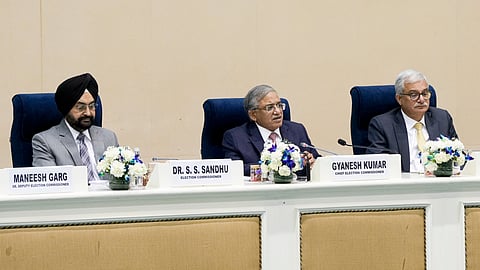

India has just swung into another intense election season. The Election Commission of India’s announcement of polling schedules for Tamil Nadu, Kerala, West Bengal, Assam and the Union Territory of Puducherry has set the stage for another high-stakes battle for key assemblies. Roughly 17.4 crore citizens across 824 constituencies will be eligible to vote in these elections that come soon after the Special Intensive Revision of rolls in these territories, making it one of the most significant democratic exercises of recent times. The voting will be held over three weeks—in Assam, Kerala and Puducherry on April 9, in Tamil Nadu on April 23, and in West Bengal over two phases on April 23 and 29.
Counting for all territories is scheduled for May 4. While Tamil Nadu and West Bengal benefit from over a month of campaigning time, Assam, Kerala and Puducherry have just three weeks until polling day, followed by an arduous month-long wait for the results. This long timeline renews concerns about the logistical feasibility of the much-discussed ‘One Nation, One Election’ idea that seeks to synchronise national and state polls.
Though seat-sharing negotiations continue in most states, some parties swiftly declared candidates and flagged off their campaigns soon after the date announcement. Along with the poll bugle come ECI’s actions to ensure the perception of administrative neutrality. In West Bengal, it directed the transfer of the chief secretary, home secretary and a few senior police officials soon after releasing the schedule, triggering sharp protests in the state and a walkout by Trinamool Congress MPs in the Rajya Sabha. In Tamil Nadu, four senior police officials were transferred, with the chief secretary instructed to submit a compliance report soon.
With the Model Code of Conduct in effect, surveillance of cash movements has become more stringent. While curbing illicit funding remains essential, incidents such as the detention of an individual in Coimbatore carrying ₹54,000 for a genuine medical emergency highlight the need for the roving inspection squads to balance vigilance with humanitarian sensitivity.
The SIR process, mired in controversy over deletions and transparency—with net removals of nearly 74 lakh names in Tamil Nadu, 64 lakh in West Bengal and 9 lakh in Kerala—along with the other preparatory steps the ECI undertook over the past year must ultimately deliver transparent, credible and equitable polls. As the ECI itself reminded, the world will be watching.
