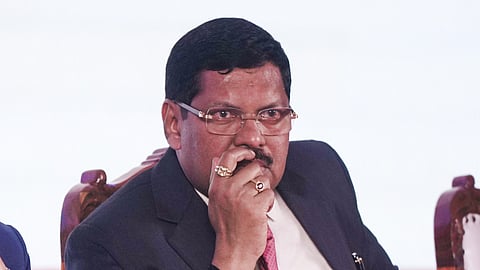

Retired Chief Justice of India B R Gavai’s sharp critique of appointments in the higher Judiciary being bereft of diversity is a wake-up call for his successor and the collegium he leads. Citing government data, he wrote to President Droupadi Murmu that out of the 715 high court judges appointed since 2018, only 22 belonged to Scheduled Castes, 16 to Scheduled Tribes, 89 to Other Backward Classes and 37 to minorities. In other words, about three of every four judges of constitutional courts came from the general category. Also, as many as 80 percent of the appointments between January 2021 and January 2026 were from the forward communities, and the share of OBCs in the higher Judiciary is less than 14 percent.
Appointment of judges to the higher Judiciary is made under Articles 124, 217 and 224 of the Constitution, which do not provide reservation for any caste or class of persons. So, the onus is on the collegium system to find ways to make the Judiciary representative of the society at large. However, there is little murmur on the caste skew, making silence a part of the problem. Justice Gavai was the first Buddhist and the second Dalit after K G Balakrishnan to head the Indian Judiciary. Union Law Minister Arjun Ram Meghwal, too, hails from an SC community. Yet, the problem of diversity remains unaddressed.
Lack of gender justice is another glaring systemic problem. Women comprise just a small fraction of judges in the higher Judiciary: according to a study last year, only 110 of 765 high court judges were women. That women judges contribute to making the system more accessible and equitable is undisputed. Yet the pipeline to promote them from district courts remains clogged.
The former CJI also pointed to the random transfer of high court judges, saying some of them previously transferred on punitive considerations were now being rewarded with appointments as chief justices of prominent high courts, while a meritorious and hardworking chief justice was transferred to a smaller high court to accommodate another judge. These are serious charges that could erode public confidence. The collegium system cannot remain inert and unaccountable. Justice Gavai ought to be seen as a whistleblower. It’s time for the collegium to offer explanations and usher in transparency.
