
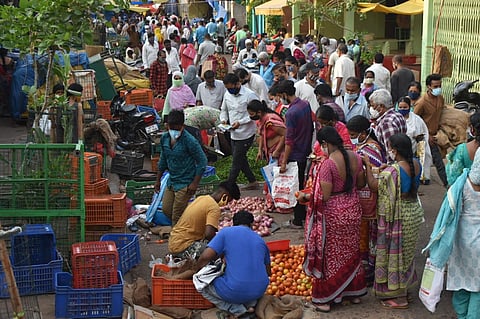
Telangana deflation casts light on factor keeping India's rate low
Statistics can confirm, challenge, or confound. In the case of October’s retail inflation rates for Telangana and the nation, it can clarify too. Both the counts notched up records, but of different kinds. The national retail inflation rate printed at 0.25 percent, the lowest since the beginning of this Consumer Price Index series a decade and a half ago. On the other hand, in Telangana retail prices fell for the fourth time in five months—one of the dozen states that faced deflation in October. Among the causes contributing to both phenomena are GST rate cuts, higher bases a year ago, and lower food prices, which command a substantial combined weight in the CPI. It should be a moment to cheer—high growth estimates at a time of low inflation. However, economists advise a degree of caution.
They argue that food inflation is unlikely to hold low for long because of a number of factors ranging from supply constraints to extreme climate events and geopolitical disruptions. Experts also point out that the shift to a new CPI series next year will affect calculations, as food items will carry less weightage; non-food inflation is higher for most other categories at present.
The other side of the coin is seen in Telangana, the only state to have registered a deflationary run this long. Between June’s -0.93 percent and October’s -1.16 percent, the state rate has remained subterranean—except in August, when it rose marginally to 0.94 percent before slipping again. Both urban and rural Telangana are in the same boat, though the price falls are sharper in the villages. Though this is good news for consumers, it isn’t so for producers.
Plummeting rural demand could presage a more acute agrarian distress—less money in the hands of farmers or a lower inclination to spend. The worry for Telangana is acute because the state is running short of cash and, with GST rationalistion, stands to lose a substantial amount of revenues, at least in the short term. In other words, it cannot spend to spur the economy. This is the time to plug farm input shortages in the short term, measure and address rural indebtedness, and improve irrigation for better long-term prospects. The same could be said for many other parts of the country.