
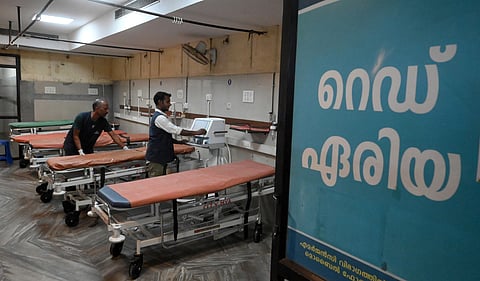
HC stamp for right to emergency care
The Kerala High Court’s order stating that hospitals cannot deny initial life-saving care for non-payment of advance or lack of documents is a landmark. It underscores the fact that the right to life overrides all other considerations and settles the formalities-versus-treatment tussle that often hampers the timely delivery of healthcare. This is significant in a country where emergency medical care, despite the legal framework, suffers on accessibility, quality, and cost. Insistence on paperwork and advance payment defeats the purpose of emergency life-saving treatment.
The direction was delivered on an appeal by private hospitals and the Indian Medical Association against certain provisions of the Kerala Clinical Establishments Act, 2018, which requires hospitals to display the list of services offered and the baseline rates for common procedures. The court ordered clinical establishments to screen and stabilise patients in need of emergency attention and ensure their safe transfer for further care, if needed, with proper documentation. Hospitals must ensure that, along with the discharge summary, all investigation reports are handed over to the patient. Upholding the validity of the Act, the court held the provisions are neither vague nor disproportionate, and conform to global standards.
The judgement reaffirms people’s right to dignified, ethical, and equitable care and is in line with the Supreme Court’s ruling that the right to medical care is an integral part of the fundamental right to life under Article 21 of the Constitution. What that means is that a government has a constitutional obligation to provide health facilities and protect citizens’ right to health. The Kerala government was only fulfilling its responsibility while legislating to ensure transparency and fairness in the care provided by private medical institutions. The legislation is founded on the necessity of ensuring public health, ethical standards, and quality of care. As the state argued in the court, balancing the autonomy of hospitals with necessary regulations is essential for an effective healthcare system that prioritises the well-being of patients and the integrity of medical practice. Now that the law has been upheld, the government must make the private institutions fall in line. There should be no compromise on timely care, sharing of records, or quality of service. The right to life is universal and must be upheld at all times.