
The announcement of dates for the Bihar Assembly election set the stage for a clash of political instincts shaped by caste loyalties, governance records, and the entry of a disruptive new player. At the heart of this complex equation stands Chief Minister Nitish Kumar, leading the JD(U). Having ruled for nearly two decades, he faces the twin challenges of inevitable anti-incumbency and questions about his health. Yet his appeal among the backward classes and women, anchored by populism, remains his strongest shield. The BJP, despite its national dominance, has learnt from electoral experience that Nitish is both an asset and a gamble, lending the NDA credibility in terms of backward-class consolidation and governance. Prime Minister Narendra Modi’s charisma is the cornerstone of NDA’s campaign; his brand and nationalist pitch stir rallies. However, Bihar’s electorate has historically distinguished between state leadership and central narratives, making Kumar’s regional stature and perceived governance record pivotal.
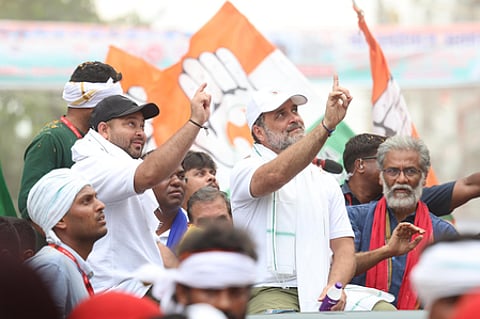
Across the aisle, challenger Tejashwi Yadav’s RJD hopes to capitalise on frustrated youth, unemployed voters, and marginalised communities, and expand his voter base beyond Yadavs and Muslims. The shadow of corruption cases linked to his father, Lalu Prasad Yadav, remains a hurdle. Rahul Gandhi, meanwhile, has turned Bihar into a test case for his national comeback. His campaign questioning the Election Commission’s voter roll revision has allowed him to project himself as a defender of the underprivileged and minority voters— a pitch that will be tested in the state’s rural heartlands. Adding a third dimension to the contest is Prashant Kishor’s Jan Suraaj Party. His anti-corruption drive and promise of reform attract some sections, though his plans remain sketchy and his on-ground presence thin. Even so, Kishor’s entry makes the traditional bipolar contest more volatile.
While commentary often frames the contest as Narendra Modi versus Rahul Gandhi, Bihar’s last two elections show outcomes determined by alliance arithmetic, marginal vote shifts, and caste blocs. With less than one percentage point separating the two big camps in 2020 and altered seat tallies in 2024, the 2025 race will be decided by continuity against change, and entrenched dynasties against reformist unpredictability. This may well be the last major electoral duel between Nitish Kumar and Lalu Prasad, two socialists who entrenched Mandal politics in Bihar’s soul much before ‘kamandal’ shouldered its way in.