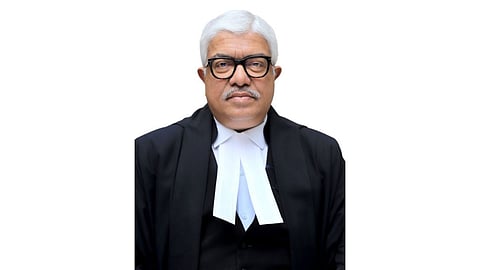

The Supreme Court collegium’s decision to transfer Justice Atul Sreedharan from the Madhya Pradesh High Court to the Allahabad High Court—after the government asked it to reconsider its earlier plan to move him to Chhattisgarh—has raised questions about judicial independence and executive interference. What stands out is the collegium’s rare acknowledgment that the government had requested the change, while offering no explanation for why it agreed. That combination of transparency and silence leaves many questions unanswered.
Justice Sreedharan has built a reputation for firm and well-reasoned decisions in politically sensitive cases. At the Jammu & Kashmir High Court, he struck down multiple preventive detentions under the Public Safety Act, making it clear that administrative claims must be supported by solid evidence. In Madhya Pradesh, he took suo motu cognisance of a minister’s derogatory remarks about an army officer, ordered the registration of an FIR, and pointed out lapses in how the state had handled the matter.
The transfer itself is significant. Had Justice Sreedharan gone to Chhattisgarh as first recommended, he would have been the second-most senior judge there, possibly positioning him for elevation as chief justice. At Allahabad, he will rank seventh, which reduces his administrative influence. The collegium has not explained why it accepted the government’s request. Was it due to executive pressure, or a considered decision to maintain a working relationship with the government?
There are parallels with Justice S Muralidhar. In 2020, the Centre notified the collegium’s proposal to transfer him from the Delhi High Court to the Punjab and Haryana High Court just hours after he had directed the police to file cases against politicians accused of delivering hate speeches linked to the Delhi riots. In 2022, the collegium recommended his transfer from the Orissa High Court to the Madras High Court. It recalled the order in April 2023 after the government’s prolonged inaction, but refrained from questioning the Centre.
While it is unusual for the collegium to acknowledge the government’s role in the Sreedharan case, the absence of reasoning makes it difficult to determine whether the decision reflected prudence or pressure. It underscores how sensitive judicial postings remain—especially when judges have handled politically charged cases—and how essential it is to safeguard both independence and credibility.
