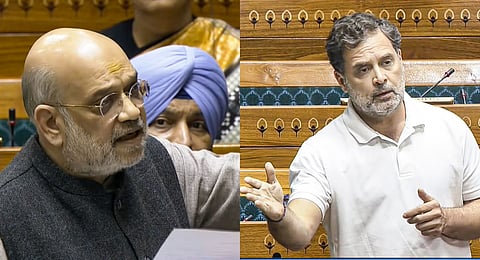

The two-day Lok Sabha debate on electoral reforms should have been an opportunity to clarify procedures, strengthen transparency, and reaffirm institutional neutrality at a time when public trust in democratic processes is increasingly brittle. Instead, it descended into a familiar political joust between the Leader of the Opposition Rahul Gandhi and Union Home Minister Amit Shah—each armed not only with arguments, but with history, grievance, and sharp-edged jibes.
Rahul Gandhi levelled a sweeping charge of “institutional capture”, accusing the Election Commission of operating without accountability and alleging “vote chori” through opaque voter-roll practices, questionable deletions under the ongoing Special Intensive Revision, and a lack of transparency in electronic voting machines’ architecture. He demanded machine-readable electoral rolls, full technical disclosure of EVMs, access for parties to examine them, protection of CCTV evidence, and removal of immunities shielding election commissioners. His warning— that a future government would “change the law retrospectively”— was as much political messaging as it was a call for reform.
Amit Shah’s rebuttal was equally political. He dismissed the opposition’s claims as “manufactured narratives”, arguing that SIR is a constitutional exercise conducted by the Election Commission independent of the government. When pressed on alleged voter-roll manipulation, he countered with the question of whether “infiltrators” and non-citizens should remain on electoral rolls—reframing the debate around national security rather than institutional procedure. He invoked historical episodes to turn the “vote chori” charge back at the Congress, citing precedents from the Nehru, Indira, and Sonia eras to argue that the opposition lacked moral authority to lecture on electoral integrity.
What might have been a sober discussion on systemic reform slid into point-scoring. Gandhi’s narrative of democratic erosion met Shah’s counter-narrative of Congress’s past failings. Allegations of voter manipulation were matched with charges of protecting “ghuspethiyas”. Both leaders ended up appealing more to their constituencies than to the substance of electoral reform.
And yet, the core question remains urgent: India needs a credible, transparent, error-free system of electoral roll revision, robust auditability, and institutional safeguards that command cross-party trust. Without concrete steps—legislative clarity, procedural reforms, or independent oversight—the debate risks becoming another episode of political theatre. Democracies weaken not only by manipulation, but also by neglect.