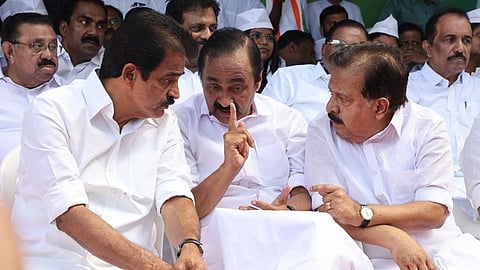

The delay in announcing the candidate list by the Congress-led United Democratic Front (UDF) has become an early talking point in the campaign for the Kerala Assembly election, raising questions about whether the opposition alliance may have ceded an initial advantage to its rivals. With polling scheduled in a relatively short time frame, the timing of candidate selection plays a crucial role in shaping the campaign rhythm at the constituency level. While the UDF leadership maintains that the process is part of routine alliance consultations, the lag in finalising candidates has allowed political opponents to question the coalition’s preparedness and unity at the start of the campaign.
In Kerala’s highly competitive electoral environment, candidate announcement is not merely an administrative step but the point at which the campaign effectively begins in each constituency. Once a candidate is declared, party workers begin booth-level mobilisation, campaign committees are formed, and local outreach programmes intensify. A delay therefore compresses the available campaign period for candidates and their teams. In many constituencies, local units remain in a state of uncertainty until the official nominee is declared, particularly when multiple aspirants are lobbying for the same seat. This can slow down the early momentum that parties seek to build in the weeks leading up to polling.
While speaking to the media in Thiruvananthapuram on Monday, CPI(M) state secretary M. V. Govindan said the Congress is still struggling to finalise its candidates and announce its list, even as Left candidates have already begun their campaign.
“Their internal tussle over candidate selection is still continuing. They are yet to arrive at a final decision on many seats. Even after they take a decision, it will take time for them to move forward with the campaign,” Govindan alleged.
Several factors appear to have contributed to the delay in the UDF’s candidate announcement. The most immediate is the process of seat-sharing negotiations among coalition partners. The Congress, which leads the alliance, has had to balance the demands of partners such as the Indian Union Muslim League and the Kerala Congress factions while ensuring that the allocation of constituencies remains broadly consistent with earlier arrangements. Negotiations over a few sensitive constituencies have reportedly taken longer than expected, particularly where multiple allies have laid claim to the same seat.
The internal dynamics within the Congress have also played a role. As the principal opposition party seeking to return to power, the Congress has faced intense competition among aspirants for nominations. Sitting legislators, former MLAs, youth leaders and even some national-level figures have expressed interest in contesting the election. Balancing generational change with the claims of senior leaders, while also accommodating regional and community considerations, has made the candidate selection exercise more complex. In several constituencies, the leadership has been forced to carefully weigh the electoral strength of individual contenders against the risk of rebellion from those who may be denied tickets.
Local-level political factors have further complicated the process. In Kerala, constituency politics is deeply shaped by community equations and local leadership networks. In some areas, resistance from community groups or influential local leaders against certain aspirants has prompted the party leadership to reassess nominations. Such consultations are often aimed at avoiding internal dissent during the campaign, but they inevitably slow down the finalisation of candidates.
The delay has political implications primarily because rival alliances have moved faster in unveiling their candidates and initiating campaign activities. Early candidate announcements allow parties to project organisational readiness and enable their nominees to begin intensive constituency tours, engage with local organisations and strengthen booth-level networks. In contrast, when candidates are announced late, they must compress several weeks of groundwork into a much shorter campaign period.
Another consequence of the delay is the impact on campaign narrative. Elections today are not only fought on the ground but also through media messaging and political perception. When a major alliance appears slow in declaring candidates, opponents often frame the delay as evidence of internal divisions or leadership indecision. Such narratives can dominate the early stages of the campaign, diverting attention from the issues the opposition hopes to highlight against the ruling government.
At the organisational level, uncertainty over candidates can also affect cadre morale. Party workers often align themselves with particular aspirants during the ticket-selection process. When the final decision is delayed, local units may remain divided, and the consolidation of campaign teams may take longer. Once the candidate is declared, the leadership must ensure that rival factions within the party quickly unite behind the official nominee to avoid weakening the campaign machinery.
However, the extent to which this delay will actually affect the UDF’s electoral prospects remains uncertain. Kerala’s elections are largely shaped by front-level political alignments rather than individual candidates alone. Voters tend to make choices based on broader political narratives, ideological preferences and the performance of the incumbent government. As a result, the organisational networks of major alliances are often capable of mobilising rapidly once candidates are finalised.
In some cases, a slightly delayed candidate announcement can even help parties make more careful choices. Extended consultations allow the leadership to assess ground-level feedback, gauge the popularity of aspirants and avoid fielding candidates who may face strong local opposition. By resolving potential disputes before the campaign begins, the party can reduce the risk of rebel candidates or internal sabotage during the election.
For the UDF, the larger objective in the coming weeks will be to quickly shift the focus of the campaign from internal organisational matters to political issues that resonate with voters. The opposition alliance is expected to emphasise governance concerns, economic challenges and the need for political change after two consecutive terms of the incumbent government. Once the candidate list is finalised, the leadership is likely to launch an aggressive statewide campaign involving senior national and state leaders to regain momentum.
Ultimately, the delay in announcing candidates represents a tactical setback rather than a decisive blow to the UDF campaign. In a state where elections are intensely fought and voter engagement is high, political momentum can shift rapidly once the campaign enters its final phase. The key challenge for the opposition alliance will be to quickly close the organisational gap created by the delay and project a cohesive and energetic campaign that can compete effectively with its rivals in the limited time remaining before polling.
