
KOCHI: Writer Neela Padmanabhan was 30 years old when he published his first novel ‘Thalaimurakal’ in Tamil. That was in 1968.
The book created ripples in the Tamil literary field and Ka Naa Subramaniam included the novel in his list of the ten best novels in modern Indian literature. Later it was translated into several languages including English, Hindi, Malayalam and German.
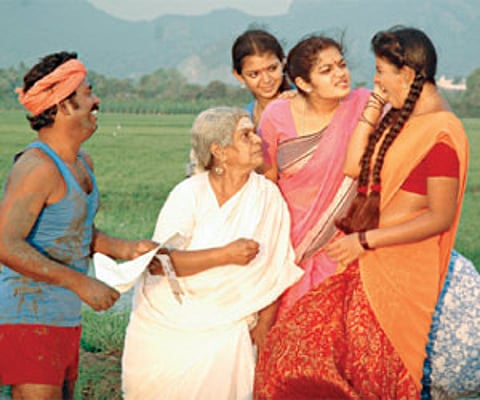
Now, more than four decades later, the novel has given birth to a feature film. The film ‘Magizhchi’ (happiness), based on the novel, is directed by reputed documentary filmmaker Gowthaman V.
Neela Padmanabhan, who belongs to the Kanyakumari district and is based in Thiruvananthapuram, is now 72 years old.
He has come a long way from the days of his first novel and is well-known as an author in Tamil and Malayalam with a number of novels, short stories and poetry collections to his credit.
His novels include ‘Uravugal’, ‘Theroodum Veedhi’ and ‘Koodinul Pakshigal.’ In 2007 his novel ‘Ilai Uthirkalam’ was awarded the Kendra Sahitya Academy Award.
He has also translated several novels from Malayalam to Tamil and vice versa. His Tamil translation of Ayyappa Panicker’s Malayalam poetry fetched him the Kendra Sahitya Academy Translation Prize in 2003.
Meanwhile, he pursued his profession as an electrical engineer and retired as Deputy Chief Engineer from the Kerala State Electricity Board in 1993.
Neela Padmanabhan reminisces on how ‘Thalaimurakal’ came to be written. “The novel was inspired by childhood memories, boyhood experiences and my observations on man-woman relationships in the neighbourhood. I started writing the novel when I was in the final year of Electrical Engineering. It took me eight years to complete the novel.”
But when he tried to get it published, he could find no takers. “In the end, I published it on my own after pawning my wife’s ornaments,” he says.
‘Magizhchi’ is Gowthaman’s second feature film, his first one being the Simran-Murali starrer ‘Kanave Kaliyathe.’
Among his TV documentaries ‘Santhanakaadu,’ on the notorious forest brigand Veerappan, was well received.
His association with Neela Padmanabhan began when he made a documentary on the life and writings of Neela Padmanabhan for the Kendra Sahitya Academy.
On why he chose ‘Thalaimurakal’ to make the film, Gowthaman says: “I saw several possibilities for good cinema in the novel. Basically the story is about the resistance of the younger generation against established customs and practices which stand in the way of human happiness and make life miserable.”
“What attracted me in the novel was the rural setting, the way the events are described in microscopic detail and also the variety of characters spanning three generations. The novel contains vivid descriptions of celebrations at the birth of a child, the ties that bind the family together, the spite among relatives, the behaviour of the neighbours, the travails of old age, the rites observed while mourning death and so on.”
The preparations for the film began more than 15 years ago. Gowthaman explains: “In 1995, I got permission from Neela Padmanabhan to adapt the novel. I wrote the screenplay and after long periods of discussions with Neela Padmanabhan, we finalised it.”
“We wrote the dialogues together making use of the dialect of Kanyakumari district, familiar to Neela Padmanabhan. Then I began to look for a producer willing to finance the film. It was only last year that my search ended when D Manivannan came forward to shoulder the responsibility.”
Interestingly, it is the director himself who plays the lead role in the film. The protagonist of the film is Theravi who belongs to the new generation. In the background are several characters belonging to three generations as seen through the eyes of Theravi.
They include Theravi’s grandmother Unnamala Aachi, Theravi’s father Nagaru Pilla and Theravi’s friend Kuttalam.
Theravi’s elder sister Nagamma is mentally and physically abused by her husband Sevantha Perumal and later sent back to her father’s house.
Afterwards Perumal remarries.
The community accepts this but when the remarriage of Nagamma is proposed, the community is hell bent on thwarting it. Theravi rebels against this double-standards and determines to put up a stiff fight against this injustice.
In the novel, the events come to a tragic end.
But the director has decided on ending the film ‘Magizhchi’ on a positive note to make it ‘more appealing to the ordinary film-goer.’
