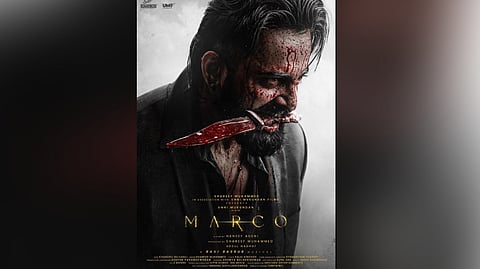

The Regional Officer of the Central Board of Film Certification (CBFC), Nadeem Thufali T, has written to the CBFC chairperson, urging the Centre's intervention to prevent the screening of the Malayalam film Marco on OTT platforms due to its extreme violent content. This comes after the CBFC had already rejected the film's satellite rights, deeming it unsuitable for television broadcasting.
According to a report by Onmanorama, Nadeem Thufali clarified that Marco had been granted an 'A' certificate by the CBFC, which is a certification for adult content. "Parents should exercise caution when allowing children to watch such films. The CBFC’s role is strictly limited to certification and does not extend to censorship. We have rejected the satellite rights for Marco as it contains content not suitable for a family audience," said Thufali. He emphasised that the film’s intense, bloody violence played a significant role in the rejection of the rights for television screening.
This action thriller, starring Unni Mukundan in the title role, was released on December 20, 2024. It tells the story of Marco, a gangster who embarks on a violent rampage after the death of his blind foster brother, Victor. The movie’s high level of bloody violence has drawn criticism, leading to its 'A' rating. The film's commercial success has been undeniable, grossing over Rs 150 crore globally against a production budget of Rs 30 crore.
The film’s OTT release had initially been scheduled for February 14, with an extended, uncut version planned for streaming on SonyLIV. However, following public outcry over the film’s excessive violence, the theatrical version was ultimately released on OTT platforms instead.
In the midst of this controversy, the Film Employees Federation of Kerala (FEFKA) has come to the defence of filmmakers, criticising political leaders and youth associations for attributing rising societal violence to violent themes in films. In a strongly worded social media statement, FEFKA dismissed these claims as rooted in a flawed reflection theory, which suggests that films directly influence real-world actions. "Films reflect society, but they do not shape it," the federation stated. Reported Onmanorama
This stance follows statements made by Kerala’s Chief Minister Pinarayi Vijayan earlier this week, in which he raised concerns about the potential effects of films and television serials on young minds. During an adjournment motion in the Kerala Legislative Assembly, he warned that films like Avesham, a recent Malayalam film, may encourage violent behaviour. He referred to a police report that claimed several students, after watching Avesham, tried to emulate gangsters from the film in real life. His comments were made during a debate on the rising incidents of violence in Kerala, which included the tragic death of a Class 10 student in a violent clash in Thamarassery, Kozhikode district last week.
In response to the growing backlash, Marco’s producer, Shareef Muhammed, issued a statement reassuring the public that future projects would be more mindful of their content. “The level of violence will be toned down in my upcoming films,” said Muhammed. He added that the film was never intended to glorify violence, and the escalation of cinematic violence into real-life actions is a dangerous trend. “The recent news reports are a reminder for filmmakers to be responsible with their storytelling,” he continued.
Despite the backlash, Marco has been celebrated as a successful neo-noir action thriller. Directed by Haneef Adeni, the film also stars veteran actors like Siddique and Jagadish. Adeni’s gritty direction and intense action sequences have earned the film both praise and criticism in equal measure. The film’s central theme, focusing on the volatile dynamics between Marco and the influential Adat family, which controls Kerala’s gold mafia, resonated with audiences but raised concerns over its portrayal of brutality.
As the debate continues, it remains to be seen how the CBFC and the government will respond to calls for stricter regulations on the depiction of violence in films, especially in an era where OTT platforms have become primary distribution channels for content. The future of Marco’s OTT release hangs in the balance, as the CBFC’s recommendation for intervention may prompt further scrutiny of films with graphic content.
