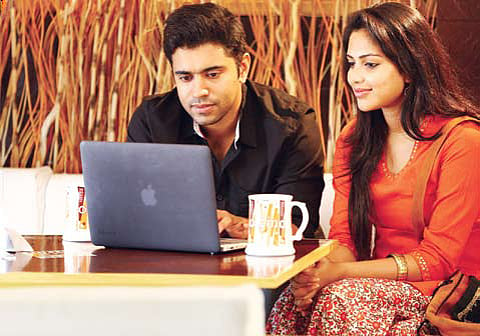

Film: Mili
Director: Rajesh Pillai
Cast: Amala Paul Nivin Pauly Sai Kumar Praveena
Schools are natural disasters. Mark Twain said God made idiots first for practise and then made school boards. Perhaps that’s why all these movies on ‘inferior’ people start with schools. Mili (Amala Paul) is daughter of a professor who wanted her to top in studies when she was in school. She was loathed for being not able to do so and it made her to look down on herself. She receded to herself as she grew up, developing a low self-esteem. She spent hours in bathroom, dipping her head in a bucket of water or standing under the shower. Worse, some of her quirks like overhearing phone calls or prying into someone else’s text messages didn’t win her any friends. She works at a play school, a convincing job description for someone who doesn’t like to be judged.
The persisting self image of an under-achiever, which Amala Paul acts with finesse, gifts Mili less control over her life. She is always dependent on her father, a role Sai Kumar dons with ease, or her local guardian Nancy (Praveena) or Nancy’s diabetic mother (Ambika). Alas, and predictably, things go haywire after sometime and Naveen, Nancy’s brother, who is a corporate trainer, empowers her to ‘say no’ in life.
Nivin Pauly as Naveen strikes a wonderful balance in drawing all attention to his character but never entering into the center stage, leaving all limelight on Amala.
There are some interesting short hands at play in the movie. We get to hear ‘oru dalam maathram’ in radio during Mili’s childhood, which is a marker to turn calendars to the end of 90s. The director also shows us what kind of books they read.
When they both enter a bookstore, Naveen picks up a Robin Sharma while Mili is interested in Ravinder Singh. There are three scenes you need to particularly watch out for: when little Mili gets on to the bed along side her mother when she is deeply disappointed, when she realise her first lover was a flirt, when three blade marks are shown on her hand. Though it’s Rajesh Pillai’s second venture, such ropes prove he is interested in telling the story visually, than investing too much on narration likes his peers.
Nothing is overplayed in the movie, even the emotions are expressed with a certain subtility. There is an exception for this however with the music directors, Gopi Sundar and Shan should at once realise that straining the vocal chords of singers or running hands marathon on the guitar isn’t so necessary to make audience feel when Mili break free from her inhibitions.
It is a fact that the movie doesn’t grab us much deeper as it should have been. While it’s not overplayed, it comes out sort of undercooked. There is more focus on what Mili does before and after she breaks free. Scriptwriter Mahesh Narayanan should have been looking more into how Mili is taken through the transformation.
There are tropes that could have been made more sharp like the smiling dustbin, the kids in day care, her sort of revenge with Arun Iyer (Amol Parashar) and the speech at the ending.
Before signing off, I just wonder, with 22 female characters, is this the movie with the longest duration and share of screen space for women in Malayalam cinema?
