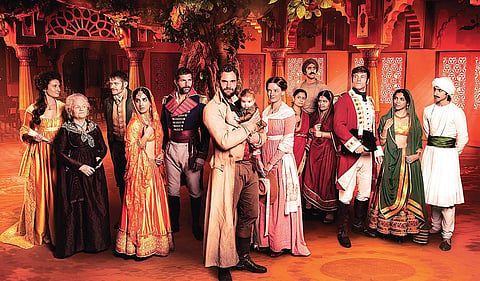

John Beecham is a trader-with-a-past who is busy setting up his palatial residence when we first meet him in Delhi in 1795. The series follows Beecham, his family and staff, as they move into the titular house in Delhi. Mysterious and brooding, Beecham barely reveals anything interesting about himself at all. He won’t say what he’s doing or why he is brooding, or why he has brought a child with him. In the first two episodes of Beecham House he even refuses to say who the baby’s mother was.

Director Gurinder Chadha, who is best known for Bend It Like Beckham and Bride and Prejudice, has put together a stellar cast and painted a historical canvas in trying to recreate an Indian Downtown Abbey. The locations and history are well-researched and the historical context of Mughal emperor Shah Alam II is a rather unexplored territory in the cinematic university. Several characters, in fact, are rooted in history and existed during the period shown on screen. But Beecham House staggeringly falls short of its promise. There’s period drama, magnificent palaces, extraordinary cinematography, intricate costumes, lofty dialogues and an extremely good-looking cast but the web series falls short of motive and story-telling.
Indian royalty and its consequent takeover by colonial forces have made for iconic premises in many films such as Mughal-e-Azam, Jodhaa Akbar, Lagaan, Shatranj Ke Khilari among many others but the Netflix drama is unable to tap into the pulse of the bygone era. The series seems to have focused more on the glamorisation of the cinematic elements than the characters and the plot. Nothing really happens in the series, except for the final episode ending with an obvious cliffhanger that will necessitate a second season.
Beecham House certainly looks glorious with several iconic Delhi forts having been used as the backdrop. The cast, including Lara Dutt and Tisca Chopra, manages to pull you throw the rather tedious six episodes. But their dialogues seem straight out of a play and end with sharp staccatos. Chadha seems to have found a period of Indian history that hasn’t been done to television death already, but having made those promises that we were in for something genuinely fresh—the show should have offered more than just a dose of colonial history.