
Chennai Love Story Movie Review:
Sai Rajesh and SKN, who earlier delivered the National Award-winning Baby, have reunited for Chennai Love Story, which released on Friday. While Sai Rajesh has penned the story, his longtime associate Ravi Namburi, who worked as an assistant director on Baby, makes his directorial debut with this film. Kiran Abbavaram and Sri Gouri Priya play the lead pair, while Melody Brahma Mani Sharma has composed the music.
What makes Chennai Love Story different from the usual breakup dramas is its perspective. Instead of showing the hero turning into a Devadas after heartbreak, the story focuses on a young woman who struggles to move on after her first love fails. That refreshing approach makes the film stand out.
Director: Ravi Namburi
Cast: Kiran Abbavaram, Sri Gouri Priya, Thrigun, Siri Hanumanth, Naveen Neni, Devi Prasad, Karuna Kumar, P Vasu and others
Nivi (Sri Gouri Priya) is about to marry her boyfriend Ajay (Thrigun). However, just before the wedding, Ajay tells her that he has fallen in love with another girl and walks away, leaving Nivi devastated. Unable to cope with the heartbreak, she slips into depression and develops a drinking habit. Hoping to help her recover, her friends take her to Chennai for a change.
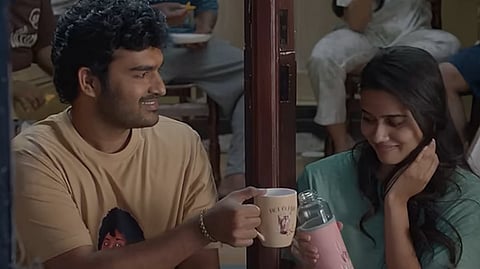
In Chennai, they meet aspiring filmmaker Steven Sankar (Kiran Abbavaram), an orphan from Nellore who is struggling to establish himself in the film industry. Steven eventually becomes part of their group and slowly begins helping Nivi come out of her emotional trauma. As time passes, Nivi starts forgetting her painful past and develops feelings for Steven. But what happens when Ajay re-enters her life? Does Nivi choose her past or embrace a new beginning?
Sai Rajesh once again explores relationships, but unlike Baby, which celebrated the intensity of first love, Chennai Love Story speaks about healing after heartbreak and moving forward in life. One of the film's strongest messages is that life doesn't end with a failed relationship. .
Director Ravi Namburi deserves appreciation for presenting the story in a simple yet engaging manner. The first half is the film's biggest strength. It moves at a breezy pace, balancing humour, emotion and romance beautifully without a single dull moment. The chemistry between Kiran Abbavaram and Sri Gouri Priya is natural, making the audience invest in their journey.
Steven Sankar is written as a lower middle-class youngster chasing his dream of becoming a film director. He keeps narrating stories to filmmakers but repeatedly faces rejection because his stories lack originality. It is Nivi who inspires him to think from his heart rather than imitate other films, and that advice changes his outlook. That small but meaningful moment becomes an important turning point for his character.
Kiran Abbavaram perfectly fits the role of Steven. His innocence, dialogue delivery, comic timing and body language make the character instantly likeable. His performance never feels forced and he carries several entertaining scenes effortlessly. His interactions with Nivi are heartwarming, and the chemistry between the lead pair works throughout the film.
The screenplay also deserves appreciation because several scenes introduced in the first half return with emotional significance later. The hotel boy who keeps talking to his deceased father appears to be mentally disturbed at first, but the emotional payoff in the second half gives that track a touching conclusion. Similarly, another scene where Steven helps a young boy travelling on a bus later returns with emotional impact. These moments show that the writer and director have attempted to connect the narrative emotionally instead of relying only on commercial elements.
However, the film loses some momentum after the interval. The overall narrative becomes predictable, and a few scenes could have been crisper. Even then, Ravi Namburi manages to maintain the emotional depth of the story. The sequence in which Nivi is taken away by a cab driver with evil intentions and Steven rescues her with the help of street dogs is one of the best episodes in the film. Besides creating tension, the sequence also establishes Steven's importance in Nivi's life.
Ajay's re-entry into the story brings fresh drama to the second half. Though the audience can predict where the story is heading, the emotional writing and the performances keep the film engaging. Instead of depending on unnecessary twists, the film stays rooted in its emotional core.
Without any doubt, Sri Gouri Priya is the real hero of Chennai Love Story. She delivers a performance that carries the entire film on her shoulders. From portraying a heartbroken young woman battling depression to slowly rediscovering happiness, she performs every emotion with remarkable maturity. Her dialogue delivery, expressions and emotional scenes are outstanding. The opening portions of the second half especially showcase her acting abilities. Telugu cinema has found another talented performer in Sri Gouri Priya, and this film should open many more opportunities for her.
Kiran Abbavaram is equally impressive. He brings honesty and innocence to Steven Sankar, making the audience root for him from beginning to end. His comic timing is excellent, while his emotional scenes are handled with equal ease. After watching the film, it is difficult to imagine anyone else in the role. The scene where Steven innocently asks Nivi about her previous love is one of the funniest moments in the film.
Thrigun delivers a restrained performance as Ajay. Siri Hanumanth and the group of friends provide good support and appear natural throughout the film. Devi Prasad is effective as Nivi's father, while director P Vasu appears as himself in a brief but neat role. Karuna Kumar, playing the owner of a small hotel, performs convincingly and leaves a mark despite limited screen time.
Another major strength of Chennai Love Story is Melody Brahma Mani Sharma. His music is one of the biggest assets of the film. Both the songs and the background score elevate several emotional and romantic moments beautifully. After a long time, Mani Sharma delivers an album that blends perfectly with the narrative, reminding audiences why he remains one of Telugu cinema's finest composers.
The dialogues are another highlight. Many conversations are thoughtful and emotionally effective without sounding preachy. Anantha Sriram's lyrics complement the film beautifully and add emotional weight to the songs. Viswas Daniel's cinematography is visually appealing, with every frame looking colourful and rich. Every scene captured beautifully, giving the film a pleasant visual texture. Technically, the film maintains high production values throughout.
Though there are a few loopholes in the second half and the story becomes predictable at times, Chennai Love Story still emerges as one of the better romantic dramas in recent years. It succeeds because it relies on emotions rather than unnecessary commercial gimmicks. There are no vulgar dialogues, forced comedy or over-the-top action sequences. Instead, the film offers a refreshing love story with heartfelt performances and meaningful emotions.
After watching so many films filled with violence, gore and deafening background scores, Chennai Love Story arrives like a breath of fresh air. It may not be perfect, but it has plenty of heart. Kudos to Sai Rajesh, SKN and debutant director Ravi Namburi for delivering a sincere, emotional and entertaining romantic drama.
