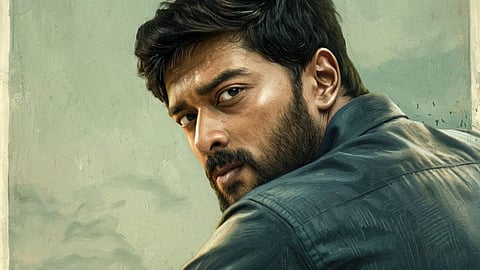

Mango Pachcha Movie Review:
The easiest mistake to make with Mango Pachcha is to assume it is a film about drugs. First-time director Viveka cleverly subverts that assumption. The ganja fields, whispers of contraband, and the rise of a local operator are merely the backdrop. What the film is truly interested in is ambition, and the price people pay in pursuit of it.
Director: Viveka
Cast: Sanchith, Kajal Kunder, Jai Gopinath, Harini Sreekanth, Mayur Patel, Prashanth Hiremath, Ugramm Manju, Hamsa, and Siddharth Madhyamik
Set between 2002 and 2006 in Mysuru,, the story follows Prashanth, better known as Pachcha (Sanchith), a young man from a middle-class family who is trying to build a future for himself while supporting his mother (Harini Sreekanth) and younger brother, Shyam (Jai). He runs a DVD shop, dabbles in movie piracy, and dreams of a life with Sooji (Kajal Kunder), the woman he loves. But when opportunity arrives disguised as temptation, Pachcha finds himself pulled into a dangerous network where influence, respect, and power become harder to resist than the trade that fuels them.
Viveka begins with a strong sense of location. Before the narrative takes shape, Mysuru does. Through sketches, familiar landmarks, cultural references, and the invocation of Chamundeshwari, he establishes a city standing at the crossroads of change. The period setting never feels decorative. It becomes an important part of understanding the choices these characters make.
And into this world walks Pachcha. Launching a newcomer is easy; making the audience invest in his journey is considerably harder. Mango Pachcha, Sanchith's debut film, understands that challenge. Viveka does not present him as an invincible hero. Instead, Pachcha enters as an ordinary young man from a middle-class family whose aspirations are larger than his circumstances. It is a wise decision because his transformation only works if we first understand where he comes from.
For a first film, Sanchith leaves a strong impression. There are moments when audiences may be reminded of Sudeep through his voice, physicality, and screen presence, but the performance succeeds because he never relies solely on those similarities. He approaches Pachcha with restraint. Even when dialogue is limited, he communicates through expressions, pauses, and observation. As the character evolves, Sanchith settles comfortably into the emotional demands of the role. The rough edges of a debut performance surface occasionally, but his sincerity remains intact. More importantly, he never appears to be chasing heroic moments.
There is a message from Kichcha Sudeep early in the film that carries significance beyond a mere appearance. It feels like a gesture of encouragement towards a newcomer finding his place. It is the arrival of a performer with potential.
The film's strongest moments emerge from its relationships. Pachcha's ambitions matter because the people around him matter. Kajal Kunder brings warmth and conviction to Sooji, portraying a woman who possesses both independence and self-respect. Jai, as Shyam, leaves a lasting impression. Sharing several important moments with Sanchith, he displays confidence and emotional maturity, making him another newcomer worth watching. Harini Sreekanth strengthens the family dynamic, ensuring the story never loses sight of its emotional foundations.
What stands out most is how Viveka approaches aspiration. Everyone in this world wants something. A businessman wants expansion. A politician wants influence. A strongman wants legitimacy. A young man wants respect. The drugs may drive the story, but ambition drives the people within it.
The supporting cast enriches that idea. Prashanth Hiremath surprises with a measured performance as Mayor Mahendra. Mayur, as Nagappa, effectively captures the intersection of business, politics, and family interests. Ugramm Manju delivers one of his more restrained performances in recent years, allowing his presence rather than volume to do the work. Siddharth Madhyamik and the rest of the ensemble fit naturally into Viveka's world.
The period setting remains one of the film's major strengths. DVDs, video libraries, local theatres, and small businesses evoke an era when ambition was beginning to move faster than opportunity. These details do more than trigger nostalgia; they help explain why certain choices feel attractive to characters searching for a way forward. Priya Sudeep’s debut production, alongside Karthik Gowda and Yogi G Raj, delivers exactly what the story requires.
Visually, the film benefits enormously from Shekar Chandra's cinematography. His recreation of early-2000s Mysuru feels authentic without drawing attention to itself. The art department deserves equal credit for rebuilding a familiar world with care and detail.
Charan Raj's music is another significant asset. Songs like 'Nammavva Hasravva' emerge naturally from the narrative, while the score effectively supports the emotional undercurrents of the story.
At just 95 minutes, Mango Pachcha moves swiftly, and that energy works in its favour, but it also leaves certain emotional threads underexplored. The relationships between mother and son, brothers, and lovers could have benefited from additional depth. A few supporting characters deserved more breathing room.
Yet even in those moments, the film remains focused on a compelling question: what happens when the pursuit of respect slowly turns into an obsession with power?
That question gives Mango Pachcha its emotional centre. Viveka is not interested in glamourising the underworld. Instead, he uses it to explore the seductive nature of ambition. By the end, Mango Pachcha follows the making of a young man who sees an opportunity in a growing underground economy and believes he can build something bigger than himself.
And in that sense, the strongest drug in Mango Pachcha is not what grows in the fields, but the intoxicating belief that the next victory will finally be enough. The closing surprise suggests that Pachcha's story, and perhaps his kingdom, is far from over.
