
In a world where scrolling is instinctive, we start our mornings with it, end our days with it, and gauge trends by it. Amid this attention economy, a new generation is quietly redefining what it means to have a “career.”
Across Chennai and Bengaluru, medical students, architecture graduates, lifestyle storytellers and marketing professionals are turning Instagram from a casual pastime into serious work.
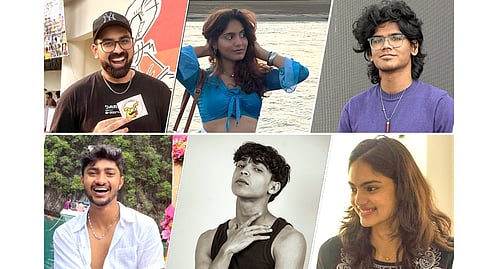
For many of them, it didn’t start with a strategy. It began with guitar covers, silly videos made for friends, random rants, or snippets of everyday life. Slowly, those posts turned into collaborations, freelance projects and, for some, full-time incomes. Creators like Nihal Nair, Rayhaan Shaik, Thaj, Muhammed Fayis, Sim Pereira and Chaya are not just chasing viral moments — they are building something that demands consistency, creativity and resilience.
But behind the filters and trending audio lies a far less glamorous reality. Brand negotiations, fluctuating income, algorithm changes, burnout and the constant pressure to stay relevant are part of the job description. The numbers matter. The engagement matters. And staying visible often feels like a full-time performance.
This TNIE story looks beyond the polished reels to understand what influencer marketing really means for those living it. Through their experiences — from the thrill of a first pay cheque to the anxiety of disappearing reach — one thing becomes clear: while influencing may look effortless on screen, sustaining it requires far more grit than a perfectly edited video lets on.
At 23, Nihal Nair, known on Instagram as Chalibro, lives a double life, content creator by passion and MBBS student by profession. Chennai-based Nihal's journey began in Kochi, not with jokes but with music. He started by posting guitar videos, collaborating with fellow musicians and performing gigs.
During the Covid period, he became part of a group called Natil Evideya, where they did fundraisers and creative collaborations. Slowly, humour crept in. “I started posting joke videos with my friends. I would ask someone a question, and when they wouldn’t answer, I would answer it myself. That became my thing,” he says.
Consistency changed everything. “I started posting regularly and thought, you know what, maybe I can actually be a content creator.” Three years later, he still enjoys the process.
Monetisation, however, came as a surprise. “When people first approached me for advertisements, I said no. I didn’t even know brands paid influencers. I thought only YouTube paid money,” Nihal admits. His first collaboration earned him around Rs 10,000, a moment that made him realise Instagram could be more than just a hobby.
Currently, Nihal works as a freelancer. Brands approach him directly, though he explains how agencies function. “An agency pitches your profile to brands, handles negotiations, everything, like a manager. They take around 20 per cent.” For now, he prefers independence.

There’s pressure to stay relevant. If you disappear, brands forget you
Nihal Nair
Trust, he believes, is everything. “When you’re starting out, you won’t make much. Brands need to trust you. Once you’re closer to 100k followers, that trust builds.” Payments depend on content quality, engagement and even the city you are based in.
Despite knowing influencers who earn over Rs 1 lakh a month by doing two or three collaborations, Nihal limits himself to one brand deal a month. “There’s pressure to stay relevant. If you disappear, brands forget you.”
When it comes to algorithms, Nihal keeps it real. “Honestly, I have no idea how Instagram works. One day it says short videos work, the next day long ones. I focus more on attention span. Earlier my videos were one minute. Now they’re just ten seconds.”
He enjoys what he does, and that joy shows. “When you monetise something you love, it stays fun,” he says. In the future, Nihal is confident: influencer marketing is only going to grow. “More creators will come, and brands will spend more money. It’s booming.”
For Rayhaan Shaik, content creation was not a sudden decision, it was a childhood dream. “I started making silly videos for my family when I was ten,” says the Bangalore-based creator. In sixth standard, when asked what he wanted to become, his answer was clear: YouTuber. Back then, it was still considered unrealistic.
An architecture student by education, Rayhaan initially created content for his niche community. People noticed. An internship at a social media company helped him understand the technical side of things, a turning point. Later, he founded a startup called Mentor Match, giving marketing a Gen Z spin.
Make content people watch till the end. Make it shareable. That’s it.
Rayhaan Shaik
In June 2023, he decided to focus on himself. “I realised I was doing marketing for everyone else. Why not do it for me?” Today, he makes comedy sketches, Bangalore-based content and a popular series where he acts out Google reviews of famous places.
Instagram became his main income in 2023. But for Rayhaan, the biggest challenge is not money or algorithms. “The challenge is recognising how lucky I am. This doesn’t feel like work. I do what I love and put it online.”
He believes the core algorithm never changes. “Make content people watch till the end. Make it shareable. That’s it.” Rayhaan sees content creation as an outlet for people who never had one before. “All you need is a phone and an idea. It’s a great side hustle. Everyone should try it once.”
Chennai-based Thaj, 23, has been creating content for four years. A Viscom graduate from Loyola College, he makes rant videos, sketches and comedy content. He started earning from Instagram in 2023, and today, content creation is his full-time job.
“For us, the only way to make money is promotions,” he says honestly. But the biggest struggle is relevance. “The hardest part is not getting famous, but staying famous. New creators come every week. You have to constantly reinvent yourself.”
People think making money on Instagram is easy and luxurious. It’s not. It’s very unstable.
Thaj
Income instability is another reality. “One month you get five promotions, the next month none. That pressure is real.” Algorithm changes add to the uncertainty, making it hard to plan.
Thaj also addresses a big misconception. “People think making money on Instagram is easy and luxurious. It’s not. It’s very unstable.” His advice is simple: create for the right reasons. “If your core reason is money or fame, it won’t last. People can see through that.”
For 21-year-old Muhammed Fayis, content creation was never planned. “It chose me,” he says. Known as Paichu online, the Bengaluru-based creator makes fashion, self-care and lifestyle content across Instagram and YouTube.
He started five years ago, purely for fun. For two years, there was no money involved. Later, he dropped out of college to fully commit to his craft, a risky but defining decision. Today, brand deals, affiliations and YouTube revenue make up his main income.
Family and friends judging you, that fear is real
Muhammed Fayis
Uncertainty, burnout and fear of judgement have been his biggest challenges. “Family and friends judging you, that fear is real.” Still, he enjoys being challenged creatively.
“There’s this idea that creators make money every month. That’s not true. Some months are great, some months are zero,” he says. For Fayis, the joy of creating outweighs the noise.
Sim Pereira, a lifestyle creator and storyteller from Bangalore, grew up performing on stage. Moving in front of the camera felt natural. Four years into content creation, she now shares her life through Instagram stories and lifestyle posts.
She began earning 6–8 months into creating content, mainly through brand collaborations. Over time, brands also hired her as a presenter and freelance content creator. What started as a side job slowly became her main income.
Numbers start to matter more than content. You overthink everything.
Sim Pereira
But lifestyle content comes with a cost. “Competition is insane. Standing out is very hard,” she says. The mental toll is heavy. “Numbers start to matter more than content. You overthink everything.”
For lifestyle creators especially, the line between real life and reel life blurs. “It affects your self-confidence, your life, everything. You have to be mentally strong.”
Despite the challenges, Sim believes content creation is a valid, powerful career. “My childhood self would be so proud. It looks easy from the outside, but it’s a 24/7 job.”
Chaya is a new creator based in Bangalore, balancing a full-time marketing job alongside Instagram. She started posting in August 2025, with zero followers and no clear plan.
Her content is relatable and opinion-driven, internet culture, careers, money, emotions and unspoken thoughts. “I’m not earning yet,” she says honestly. “I don’t have a specific niche, and brands care about that.”
She has noticed creators with fewer followers landing big brand deals, simply because their niche is clear. Still, she creates for love, not money. “I don’t want to promote things I don’t believe in.”
I don’t have a specific niche, and brands care about that.
Chaya
Burnout, comparison and self-doubt are constant challenges. “Sometimes I wonder what’s the point of all this recording and editing.” For her, the biggest misconception is that Instagram money is easy. “It’s not passive at all.”
Her one-line truth hits hard: It looks fun from the outside, but behind the scenes, it’s not always fun.
The answer, clearly, is yes, but not in the way many imagine. Influencer marketing works because people trust people more than ads. Reels feel personal. Creators feel relatable. Brands are not just selling products anymore; they are borrowing trust.
But behind every viral reel is consistency, uncertainty, pressure and emotional labour. Algorithms change. Reach drops. Income fluctuates. The glamour is real, but so is the grind.
Influencer marketing is shaping how people earn, learn and influence. It has opened doors for creativity beyond traditional careers. At the same time, it demands resilience, authenticity and mental strength.
In a world where scrolling never stops, influencers are not just selling products, they are shaping culture. And as long as attention remains the currency of the internet, influencer marketing is not just the future. It is already the present.