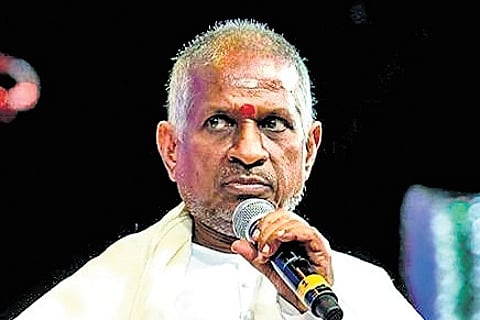

The focus of the music industry is currently on the Saregama India Limited vs Ilaiyaraaja litigation, in which the Delhi High Court, on July 1, refused to vacate its interim injunction granted in favour of the music label in a copyright dispute with the legendary composer. The ruling restrained the composer from exploiting the disputed works, issuing licences, claiming ownership before third parties, or communicating and broadcasting them pending adjudication of the suit. The catalogue includes celebrated albums from films such as Annakkili, 16 Vayathinile, MullumMalarum, Nizhalgal, Raaja Paarvai, Netrikkann, Kalyanaraman, and Pallavi Anu Pallavi.
What is the root cause of the Ilaiyaraaja vs Saregama dispute?
It stems from a copyright infringement suit Saregama filed before the Delhi High Court over songs from 134 films Ilaiyaraaja composed between 1976 and 2001. Saregama contends that it acquired the copyright in these works through assignment agreements with the respective film producers and alleges that Ilayaraaja unlawfully asserted ownership over the songs, licensed them to third parties, and made them available on digital streaming platforms without its consent.
Ilaiyaraaja, on the other hand, maintains that as the composer and author of the musical works, he retains copyright in the underlying compositions despite the producers' ownership of the sound recordings. In February 2026, the Delhi High Court granted an interim injunction restraining Ilaiyaraaja from commercially exploiting the disputed works pending the final adjudication of the suit, and in July 2026, it declined to vacate that injunction.

What was the basis of the Delhi court's ruling?
The court's reasoning is rooted in the Copyright Act. The bench, while finding that the copyrights have been passed to Saregama through agreements, distinguished between different copyrights in a song, the musical composition, the lyrics, and the sound recording. It observed that Ilaiyaraaja exceeded the rights he retained and that a composer cannot automatically control every exploitation of a film song. However, the court also held Ilayaraaja's authorship over the song. The ruling demarcates the rights enjoyed by an owner and author. The court, citing section 14 (a) of the Copyright Act, also upheld Ilayaraaja's rights as the author of his "musical work," that is, his composition sans the lyrics.
Who are the stakeholders in the recording of a song, and what rights do they have?
The key stakeholders are the producer, composer, lyricist, singers, performers and the music label. Each owns or controls different rights. The producer usually owns the sound recording and film rights, while composers and lyricists retain authorship and are entitled to royalties under the Copyright Act.
What is IPRS? What is its role?
The Indian Performing Right Society (IPRS) is the only copyright society registered under the Copyright Act, which is authorised by the government of India to collect royalties for and on behalf of all the artists who are lyricists and music directors.
Why is Ilaiyaraaja not a part of IPRS?
It's a voluntary body. Membership is voluntary too. A non-member like Ilaiyaraaja can individually go and collect his royalties. The composer chose to quit the IPRS after he felt that adequate royalties weren’t being paid to him, especially from concerts held outside India. “He chose not to be a part of it because he thought it was not giving him adequate royalties. So, he stepped out of it, and if he is giving the collecting rights to IPs, if he wants to do an event on his own, he has to take rights from IPRS, pay a royalty to it, and take them back later,’ says MS Bharath, founder and managing partner of Kria Law, a firm that specialises in IP-related disputes.
Why are the rights of a song divided when the composer assembles it?
The reason is that a composer is commissioned by a producer to work on the songs of a film, which is where the ownership and authorship dichotomy lies. There is no room for such confusion in works such as Ilaiyaraaja's symphony, where the initiative is completely the composer's.
According to the Copyright Act, a composer's contribution to a film song is the music sheet he/she creates. A music sheet alone doesn't constitute a completed song. Just like the composer, the producer is the one who commissions the singers, lyricists, and instrumentalists. Although the composer strings together their works, it is the producer who pays and employs all these parties and assembles a team to create a song.
When a song is meant for a particular film, what determines its usage outside of a film?
Unless a composer enters into an agreement with a producer that the song is owned by the latter only for its usage in that particular film, the producer enjoys sweeping rights over the work. Understanding the extent of these contractual rights is crucial, because much of the ownership debate surrounding older film songs arises from a misunderstanding of both the law and the agreements governing them. The ownership disputes over old songs and films primarily stem from a lack of awareness of applicable laws and legal agreements. But the law also places a check on producers to prevent them from being in an overly advantageous position. The law restricts the owner's sale of future rights.
The mediums have evolved from a cassette to a floppy disk to a CD, and now, eventually, to YouTube and other music platforms. A film producer of a 1985 film who owns a song can only sell the cassette rights; likewise, a producer in 1995 could only sell the medium that existed then. The second provision to Section 18(1) from the 2012 amendment to Copyright Act 1957, on this matter clearly states; "Provided further that no such assignment shall be applied to any medium or mode of exploitation of the work which did not exist or was not in commercial use at the time when the assignment was made, unless the assignment specifically referred to such medium or mode of exploitation of the work.
Are music labels the way to go for composers to be on an equal footing with producers with regard to copyrights?
That is one way. Composers can also state their terms through agreements with producers. If ownership of a song is the primary contention between a composer and a film producer, the musician may enter into a co-ownership agreement. In such an arrangement, a composer can enjoy all the legal rights a producer enjoys.