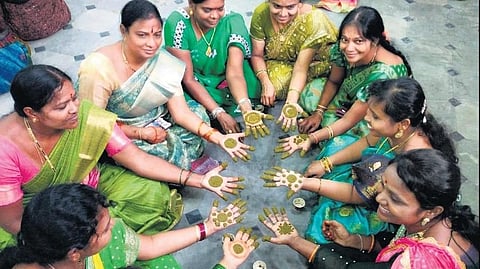

ADILABAD: Though the Ashada masam is synonymous with the Bonalu festival in Telangana, women from the Arya Vaishya community take part in the Gorintaku (mehendi) festival during the month. Not just the young, even the older ones join the festivities. Beyond its aesthetic appeal, the festival holds significant health benefits, a tradition passed down through generations.
The festival is marked by dancing, singing, and vibrant celebrations that reflect the enthusiasm of the participants. In this auspicious month, girls and women adorn their hands with beautifully designed henna patterns, signifying good fortune when the henna ripens to a rich red colour.
Women come together, offer special prayers to the goddess Gauri Devi, and design Gorintaku patterns on each other’s hands. The Arya Vaishya Mahila Sangam at the Kanyaka Parameshwari temple in Adilabad along with the women of the Saibaba temple in Teachers Colony, organise special programmes and poojas to commemorate the Ashada month. Women in Mancherial and Kagaznagar town also gathered at the Arya Vaishya community hall, celebrating the festival with great enthusiasm.
They adorn their hands with natural henna paste, collected by themselves, and sing traditional songs in unison. Gorintaku, or mehendi, is traditionally used as a decorative element during weddings and auspicious events. However, during the Ashada month, it holds particular significance. Apart from its aesthetic appeal, Gorintaku is believed to offer health benefits.
Ayurvedic practitioners suggest that it helps in reducing body heat, boosts immunity and improves blood circulation. Using natural henna, derived from nature instead of artificial colours, is recommended for maximum health benefits. The Gorintaku festival is deeply rooted in ancestral traditions and has been passed down through generations.
K Venugopal, a community member, emphasises the importance of following these ancestral customs, which continue to infuse new enthusiasm among women participating in the festival. As women gather to exchange Gorintaku patterns and rejoice in song and dance, they not only preserve their ancestral customs but also embrace the richness of their cultural heritage, he adds.