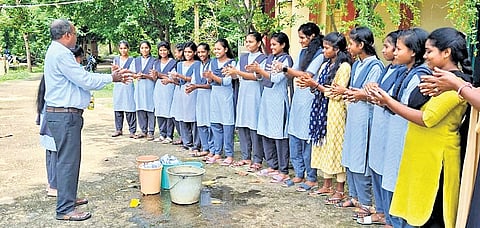

VIZIANAGARAM: In the tribal and rural pockets of Parvathipuram-Manyam, where children often arrive at school without the basics of grooming, a quiet behavioural shift is underway.
‘Mustabu’ - a district-level initiative conceived by Collector N Prabhakar Reddy - is helping students build daily hygiene habits that many had never been taught at home.
The programme, now implemented across 1,703 government institutions, including Anganwadi centres, primary and upper primary schools, high schools and junior colleges, covers 1,35,413 students.
Its impact has been strong enough that Chief Minister Nara Chandrababu Naidu, during his recent visit for PTM 3.0 at AP Model School, Bhamini, publicly praised the model and directed officials to scale it across AP.
For months, the district had been witnessing a spike in infections among schoolchildren. Many parents leave home early for agricultural or daily-wage work, leaving children to get ready on their own. As a result, students often reach with unwashed faces, untrimmed nails, or soiled uniforms. Recognising the pattern, the collector decided to intervene with a simple, child-friendly system.
Under ‘Mustabu,’ two student leaders stand at the school gate or classroom entrance each morning and conduct a quick hygiene check: Is the child’s hair combed? Are the nails trimmed? Is the face washed? Is the uniform clean? A second round of checks happens before the midday meal to ensure proper hand washing before lunch.
If a child fails the check, they are not punished or embarrassed. Instead, schools now keep soap, water, combs, mirrors and talcum powder ready. Students simply step aside, clean up, and return - a small ritual that is gradually turning hygiene into a daily habit.
“Personal hygiene is essential for preventing infectious diseases, especially in children. Students’ health is the future of the State. ‘Mustabu’ not only improves hygiene but also builds self-confidence and teaches good habits like combing hair and cleanliness,” the Collector told TNIE.
“Many parents leave early for work and cannot prepare their children properly. Earlier, students often came to school without washing their face or combing their hair. Now, thanks to Mustabu, they clean up at school and gradually learn to maintain hygiene on their own,” he explains.
“This will help build a healthier society over time,” he said. By turning cleanliness into a simple, everyday practice rather than a lecture, Manyam is showing how empathetic interventions can reshape the wellbeing of an entire generation.
