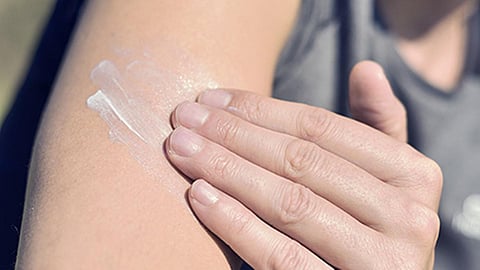

NEW DELHI: The World Health Organization (WHO) on September 5 announced a landmark update to its Essential Medicines List (EML), adding sunscreens for individuals with albinism.
WHO states that therapeutic broad-spectrum sunscreens should contain proven active ingredients in appropriate amounts to absorb or filter UVA and UVB radiation and have a high sun protection factor (SPF).
Welcoming the step, Dr Satendra Singh, Founder of Doctors with Disabilities: Agents of Change, a body of health professionals with disabilities for social justice, said, “We celebrate this historic step, which acknowledges our representation from India to recognise albinism as both a medical and a human rights issue.”
In April, Dr Singh wrote to the 25th WHO Expert Committee on the selection and use of essential medicines, to include sunscreen on the essential medicines List.
The noted disability rights champion said while WHO has set the standard, the real test lies in implementation. “We now urge the Union Health Ministry to provide free sunscreen, launch awareness campaigns to end stigma, and ensure education and health support for persons with albinism,” he added.
Albinism is a rare genetic condition caused by mutations or changes in specific genes that affect the amount of melanin the body produces. Melanin controls the pigmentation (colour) of the skin, eyes, and hair.
People with albinism are often mocked as "Suraj-mukhi" (sun-facing) or "Angrez" (British) due to their pale skin tone. As many as two lakh Indians, including health professionals, suffer from Albinism, who face daily exposure to harmful UV radiation and social discrimination.
“Adopting this critical decision is not only a matter of public health - it is a climate justice and human rights imperative. Sunscreen is far more than a cosmetic product. It is a vital, life-saving medical intervention, particularly for persons with albinism, who face unique biological vulnerabilities to ultraviolet (UV) radiation," Dr Singh, who is also a Director Professor of the Department of Physiology, University College of Medical Sciences and G.T.B. Hospital, Delhi, had said.
“This is especially critical in regions with high UV exposure, where individuals with albinism often lack access to affordable, adequate sun protection. The consequences are dire: disproportionately high rates of skin damage, disfigurement, and preventable mortality due to skin cancer. Ironically, in a society where light skin is often idealised and dark skin is stigmatised, individuals with albinism still face prejudice, exclusion, and mockery, compounding their already fragile health condition,” Dr Singh, had said in his letter.
“Their experience highlights how social and structural discrimination exacerbates health inequities, especially in low-resource settings,” the letter had said.
In his letter, he highlighted that the 2023 report from the United Nations Independent Expert on the Enjoyment of Human Rights by Persons with Albinism reaffirmed that sunscreen must be recognized and treated as an essential health product rather than a luxury or cosmetic item.
The report drew a parallel to the World Health Organization's (WHO) definition of essential medicines, which are those that satisfy a population's priority healthcare needs. These medicines are selected based on disease prevalence, public health relevance, evidence of efficacy and safety, and comparative cost-effectiveness. They are intended to be consistently available in functioning health systems in appropriate dosages, of assured quality, and at affordable prices for individuals and healthcare systems.
The WHO's list serves as a guide for countries to develop their own national essential medicines lists based on local priorities and treatment guidelines. By selecting a limited number of essential medicines that align with the national disease burden and clinical needs, countries can improve access through streamlined procurement and distribution of quality-assured medications. This approach also supports more rational prescribing practices and lowers costs for both healthcare systems and patients.