
The government on Tuesday said 274 fugitives have been repatriated from 36 countries over the past seven years, averaging around 40 annually, compared with about four a year during the 2004-13 period, marking a tenfold increase.
Assets worth Rs 17,874 crore belonging to fugitives have also been attached under the Prevention of Money Laundering Act (PMLA) during the period, a government statement said.
It claimed that previous governments lacked the political will to bring back fugitives while the Modi government has made the extradition of fugitives a "national priority".
Among the fugitives brought between 2019 and 2026 (till July), nine were wanted in financial crimes, 17 in terror cases, 42 in organised criminal activities, 62 in murder, robbery and violent crimes, 53 in sexual crimes and sexual crimes against children, 16 for drug peddling, 12 in smuggling, fake currency etc, 18 wanted in human trafficking and 45 for other offences, it said.
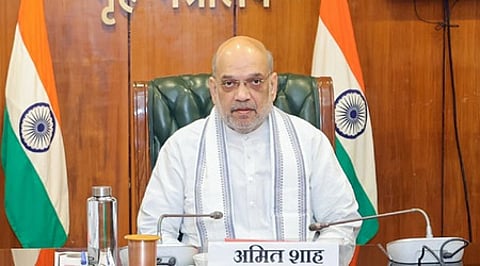
In a message on 'X', Home Minister Amit Shah said, "The Modi govt has launched integrated, intelligence-led, and technology-driven operations, hounding fugitives in foreign lands."
"The provision for trial in absentia under the three new laws has empowered the justice system to initiate proceedings against absconding criminals. Stringent application of the PMLA led to the confiscation of assets worth Rs 17,874 crore and restitution of Rs 18,762 crore," he said.
Shah said under the vision of a robust and secure India, the Modi government has pulled in the net, nabbing fugitives hiding abroad.
"Regardless of which country they absconded to, India's new approach to national security has ensured the return of 274 criminals since 2019, compared with a mere four per year during the UPA regime.
"Gone are the days when criminals were allowed to sneak through the gaps in the system. New India has addressed every gap in the old system through new laws, institutions, and global partnerships, weaving an unbreachable security net," he said.
The number of Interpol Red Notices issued has increased significantly in recent years, with 40 Red Corner Notices issued in 2022, 100 in 2023, 107 in 2024, 112 in 2025, and 182 have already been issued in 2026 so far, it said.
Over the past three years, Red Notices have been issued against 401 fugitive criminals, it said.
A Red Notice is a request to law enforcement worldwide to locate and provisionally arrest a person pending extradition, surrender, or similar legal action.
"Under the guidance of Union Home Minister Amit Shah, extradition requests are now being prepared in a more professional and standardised manner. In addition, written assurances are provided after carefully taking into account the documentary requirements and legal expectations of the requested country," the Home Ministry said.
It said India has developed an "integrated, intelligence-based, and technology-driven model" against fugitives, paving the way for stricter measures against them and facilitating their return.
In contrast, India secured the extradition of only four fugitives per year on average between 2004 and 2013, while 110 extradition requests remained pending, it said.
The Ministry said before 2014, the country's extradition framework had become outdated, and India had extradition treaties with only 37 countries, with no dedicated law to deal with economic fugitives or to confiscate their assets.
"In addition, incomplete documentation and slow processing made the extradition process highly cumbersome, often leading foreign courts to deny extradition requests. India's extradition efforts also faced legal and judicial hurdles, including the principles of double jeopardy and dual criminality, which frequently resulted in the rejection of extradition requests," it said.
It said the absence of effective coordination and a unified strategy among the Ministry of Home Affairs and other departments hindered progress as the sharing of information on fugitives, location tracking and the issuance of Red Corner Notices also moved at a slow pace.
"Previous governments lacked the political will to bring back fugitives; the Modi government has made the extradition of fugitives a 'national priority'. In line with Prime Minister Narendra Modi's vision, the Union Home Minister has emphasised a three-pronged strategy against fugitives: global outreach, strong coordination and smart diplomacy," it said.
The Ministry said the effort to bring fugitives has been driven by close coordination among the Intelligence Bureau (IB), Central Bureau of Investigation (CBI), Research and Analysis Wing (R&AW), National Investigation Agency (NIA), Enforcement Directorate (ED), Ministry of External Affairs (MEA), Narcotics Control Bureau (NCB), Directorate General of Goods and Services Tax Intelligence (DGGI), and State Police forces.
The constitution of a Standing Focus Group under the Multi Agency Centre (MAC) of the Intelligence Bureau (IB) in January 2026 marks a "significant institutional step" in strengthening India's fugitive management framework, the Ministry said.
"The Group is responsible for prioritising fugitive cases, standardising dossiers, bridging information gaps, ensuring sustained follow-up with foreign partners, and providing national-level support to cases initiated by State agencies. Fugitives operating from abroad are not dormant case files, they represent live operational threats that require sustained, coordinated, and proactive action," it said.
Prime Minister Narendra Modi enacted the Fugitive Economic Offenders Act in 2018 to strengthen action against fugitives, it said.
The Modi government strengthened action against fugitives through the 2019 NIA and UAPA amendments, expanding enforcement beyond banned organisations to individual terrorists, handlers, financiers, and overseas networks, taking up the task of bringing back criminals on a mission mode, it said.
India hosted the 90th Interpol General Assembly in 2022, which gave further impetus to the country's attempts to bring back fugitives.

The CBI launched BHARATPOL in January 2025, connecting over 1,400 agencies by integrating the CBI, State Police Headquarters (through Interpol Liaison Officers - ILOs), and District Police Headquarters onto a single platform.
"In 2024, the Modi Government implemented three new criminal laws, incorporating special provisions relating to fugitive offenders. For the first time, Sections 355 and 356 of the Bharatiya Nagarik Suraksha Sanhita (BNSS) provide for trial in absentia, enabling the entire judicial process -- from trial to prosecution -- to be completed even in the absence of a fugitive accused," it said.
Information sought by the CBI is now generally shared by other law enforcement agencies within 10 to 20 days, and in some cases, within 3 to 10 days, substantially improving the efficiency of investigations and extradition proceedings.
Union Home Minister has held a total of five important meetings in this direction, it said.
The CBI has established a Special Global Operations Centre which coordinates in real time with police agencies across the world through Interpol, enabling faster tracking and apprehension of fugitives.
"To facilitate the swift exchange of information, the CBI has also designated Interpol Contact Officers in every State as well as in all Central investigating agencies, significantly enhancing coordination and international cooperation in fugitive investigations," it said.
India also launched a crackdown on fugitives through Operation Trishul to geo-locate them with the support of Interpol. Under the operation, the locations of fugitives were established using satellite inputs, surveillance, and digital footprint analysis, it said.
"Many fugitives had changed their names or identities while residing abroad. However, through the use of advanced technology and profile mapping, Indian agencies were able to identify and trace them. Technology has also been leveraged to expedite extradition proceedings, including the use of video conferencing for court hearings, thereby helping to accelerate the legal process," it said.
(With inputs from PTI)