
NEW DELHI: India has stepped up its rescue and relief operations in flood-hit Nepal, deploying tunnel engineers, doctors, paramedics and forensic experts as rescuers race against time to reach people feared trapped in hydropower tunnels on the fifth day of the disaster.
Nepal’s disaster authority said 781 people had died and 2,502 remained missing. Across the border in China’s Gyirong County, authorities reported 16 deaths and 546 people missing. Bodies have been recovered from eight affected districts as security forces and specialist teams continue clearing debris and searching inundated areas.
As of 5.30 pm on Sunday, 149 Indian nationals had been rescued, an update from the government said.
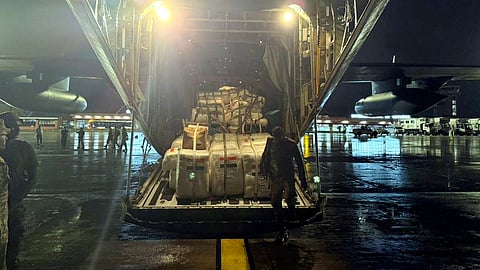
India has so far provided 68.5 tonnes of relief material and deployed specialised technical and forensic teams. A fourth Indian flight carrying 11 tonnes of assistance reached Nepal on Sunday.
The latest consignment included a tunnel technical team and equipment for search-and-rescue operations, forensic equipment for DNA analysis and essential relief supplies.
The Ministry of External Affairs said the assistance included “blankets, sleeping bags, tarpaulin, plastic sheets and hygiene kits”.
An 11-member Indian technical team, comprising doctors, paramedics and tunnel engineers, in Kathmandu conducted reconnaissance of hydropower tunnels in the flood-hit Trishuli area of Nuwakot district.
The team also carried out an aerial survey of the Chilime and Langtang areas before beginning work around the tunnel sites.
The rescue effort is particularly focused on the Upper Trishuli hydropower complex, where authorities received information that around 350 people could be trapped inside a tunnel.
An 82-member joint team of the Nepal Army, Armed Police Force and Nepal Police has been working since Friday night to clear debris and reach those believed to be trapped.
On Sunday, Nepal’s military airlifted heavy machinery to the remote site, with rescuers reaching the entrance of one tunnel and beginning to clear the debris blocking access. Oxygen supplies and cameras are being prepared for deployment once a safe passage is created.
India has also deployed forensic specialists to help identify victims.
Indian Ambassador to Nepal Naveen Srivastava met the Indian forensic team, which will work with Nepali authorities on DNA analysis of recovered remains.
Nearly 10,000 Nepali troops are involved in the wider rescue operation, alongside specialist teams from India and China.
With hundreds still missing, the immediate priority remains gaining access to isolated and debris-covered areas before survivors who may be trapped run out of time.
