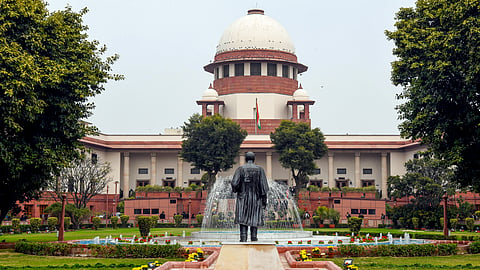

NEW DELHI: In an attempt to bring uniformity in motor accident compensation cases, the Supreme Court on Wednesday framed guidelines for determining annual income of the deceased or injured claimants based on their income tax returns (ITR).
“ITRs are statutory records and carry a presumption of correctness. In case of salaried individuals, income does not fluctuate significantly, making the latest ITR the most accurate reflection. For self-employed persons, earnings vary, so a three-year average ensures a realistic assessment,” said a two-judge bench of justices Sanjay Karol and N Kotiswar Singh.
The bench observed that while no straitjacket formula can be fixed for computing income under the Motor Vehicles Act, a distinction must be drawn — in these accidental claims cases — between the salaried employees and self-employed persons when relying on ITRs for compensation.
The verdict came on an appeal by an insurance firm challenging a high court order that had fixed the deceased’s income by picking the highest ITR from the last five years. Disapproving the method, the bench said selecting the highest return in isolation would result in inflated awards and unfairly burden insurers.
The court further said tribunals could deviate from ITRs if a particular year reflected exceptional income due to one-time gains or abnormal losses. Where ITRs are not filed, it said, courts may rely on Form 26AS, bank statements or salary slips, but must record reasons for doing so. The bench also said fluctuation in income of self-employed victims needs to be factored in. It could arise from the nature of the business, growth pattern and impact of death on the business and its potential growth.
The court directed its registry to circulate the guidelines to all Motor Accident Claims Tribunals and high courts across the country to ensure uniform application in pending and future matters.
