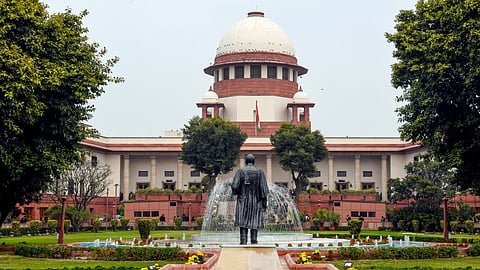

NEW DELHI: The Supreme Court on Thursday directed all States and Union Territories to formulate and notify a comprehensive policy within three months for the early or premature release of elderly and terminally ill prisoners. It also mandated a technology-driven framework via the e-Prisons portal for processing such applications.
A Bench of Justice Vikram Nath and Justice Sandeep Mehta issued the directions while hearing a Public Interest Litigation filed by the National Legal Services Authority (NALSA), which sought uniform nationwide guidelines for the compassionate release of terminally ill, sick, infirm and elderly prisoners, particularly those above 70.
The Court directed that the policy clearly define eligibility criteria and the procedural framework for considering release. It must be prepared in consultation with the respective State Legal Services Authorities (SLSAs).
The policy must also expressly define the term “terminal illness”. The Court observed that States may refer to the United Nations Office on Drugs and Crime (UNODC) Handbook on Prisoners with Special Needs while framing their policies.
To ensure objective medical assessment, the Court ordered the constitution of independent Medical Boards at the divisional and State levels to certify terminal illness or advanced medical vulnerability. Stressing the need for urgency, the Bench said procedural delays that force prisoners to spend their final months or years in prison must be avoided.
Also in top court
‘Mishra not involved in intimidation’
UP police on Thursday told the SC that former minister Ajay Mishra and his son Ashish, accused in the killing of four people in Lakhimpur Kheri in 2021, were not involved in the intimidation of witnesses and not chargesheeted for it. The bench was also informed that the trial in the case is likely to conclude within the next three months.
SC turns down pleas on bulldozer justice
The Supreme Court on Thursday refused to entertain a batch of contempt petitions alleging that demolitions were carried out in violation of its landmark November 2024 judgment laying down safeguards against “bulldozer justice”. The Court said such grievances should be raised before the High Courts.
