
NEW DELHI: New Delhi has hardened its position on the Indus Waters Treaty (IWT), making it clear that the 1960 agreement will remain in abeyance and "will not be functional in its present form" unless Pakistan takes "credible and irrevocable" action against cross-border terrorism.
Sources said the decision, taken after the April 22 Pahalgam terror attack and endorsed by the Cabinet Committee on Security (CCS), marks a fundamental shift in India's approach to the six-decade-old water-sharing arrangement.
"The Treaty was built on goodwill, trust and peaceful coexistence. That foundation has been systematically eroded by Pakistan's sustained support for cross-border terrorism. Good faith cannot coexist with terror," a source said, as Pakistan has accused India of weaponising water.
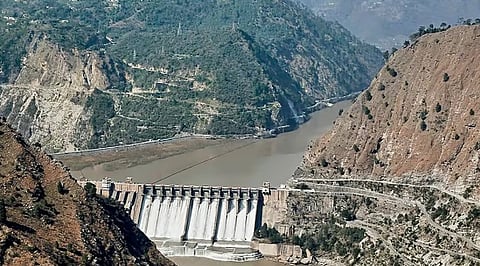
Sources said India had implemented the treaty even during wars and prolonged periods of bilateral tensions, while Pakistan repeatedly challenged almost every Indian hydropower project on the western rivers, including Salal, Baglihar, Kishanganga, Ratle and Pakal Dul.
According to sources, Pakistan has "weaponised" the treaty by routinely objecting to Indian projects and misusing the dispute resolution mechanism to delay infrastructure development.
"Routine technical issues were escalated into prolonged international disputes, imposing significant delays and costs on India's legitimate hydropower projects," a source said.
New Delhi also believes the treaty no longer reflects present-day realities.
Sources cited India's growing population, increasing demand for drinking water and irrigation, falling groundwater levels in Punjab and Haryana, climate change, and advances in dam engineering as reasons why the agreement, negotiated in the late 1950s, has become outdated.
"The treaty froze engineering standards in time. India cannot remain permanently constrained by technologies and operational practices of the 1950s while modern hydropower development has moved far ahead," sources said.
Under the agreement, Pakistan received rights over nearly 80 per cent of the Indus basin waters, while India retained around 20 per cent despite being the upper riparian.
India maintains that the IWT remains one of the most generous water-sharing arrangements ever accepted by an upper riparian state.
Rejecting Pakistan's repeated claims of an Indian-made water crisis, government sources maintained that Islamabad's problems stem primarily from poor domestic water management.
They cited Pakistan's own National Water Policy, which acknowledges that nearly 35 million acre-feet of water flows into the Arabian Sea annually without productive use and that 30-40 per cent of canal water is lost during conveyance.
After the treaty was put in abeyance, New Delhi plans to expedite hydropower development across the Chenab basin, including the 1,856 MW Sawalkote, 1,000 MW Pakal Dul, 850 MW Ratle, 624 MW Kiru and 540 MW Kwar projects.
It also plans to expand sediment flushing and reservoir management at projects such as Salal and Baglihar, arguing that such maintenance is an internationally accepted engineering practice and not an attempt to alter downstream river flows.
India has also reiterated in recent times that New Delhi does not recognise the jurisdiction of the Court of Arbitration constituted under the treaty, maintaining that its proceedings are "illegal, null and void."
"The treaty will remain in abeyance until Pakistan credibly and irrevocably abjures its support for cross-border terrorism. Until then, India will focus on fully utilising its rightful share of the Indus waters for irrigation, drinking water, hydropower and long-term water security," sources said.
