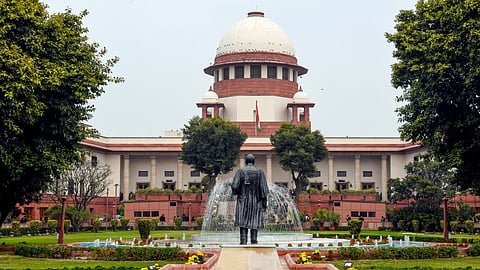

NEW DELHI: Warning petitioners and litigants against politicising the Ram Mandir donations theft case, the Supreme Court on Monday clarified that it is a case of the commission of crime. It asked the Uttar Pradesh government to examine the possibility of the special investigation team (SIT) taking up the main probe, instead of the local police.
A three-judge bench, led by Chief Justice Surya Kant, was hearing a batch of public interest litigations seeking a CBI probe into the alleged embezzlement of funds meant for the Ram temple in Ayodhya when it observed, “Just a word of caution.
Don’t politicise the issue. Courts are not a place for politics. It is a simple case of commission of crime. We are just to ensure proper investigation.” The top court added that it will make directions during the next hearing on July 27.
The bench told Solicitor General Tushar Mehta, who represented the Uttar Pradesh government, to seek instructions from his client on whether the SIT—which had earlier examined the issue before the registration of an FIR—could take up the main investigation, instead of the local police.
In compliance with the court’s earlier directives, the Uttar Pradesh SIT had submitted a report on the donation theft probe, which the court considered during the hearing. Mehta told the court that the status report was filed in compliance with the earlier order of the court.
The apex court sought to know from him the role of the SIT, Mehta clarified that it was constituted only to ascertain if a cognisable offence had been committed.
Also in top court
Centre plea on HC order on CPV junked
The SC on Monday dismissed the Centre’s plea challenging a Delhi HC verdict that quashed tender process for outsourcing CPV services at Indian missions in Abu Dhabi, Kuwait, Singapore and Canberra. The top court, however, allowed the MEA and Engineers India Limited to make arrangements for uninterrupted delivery.
SC reduces sentence of rape convict
The Supreme Court on Monday reduced the sentence of a man convicted in a 2016 rape case from life imprisonment to 20 years in jail with benefit of remission, saying there was a possibility of reformation as the offence was committed when he was 25. The bench noted that he had no criminal antecedents.
