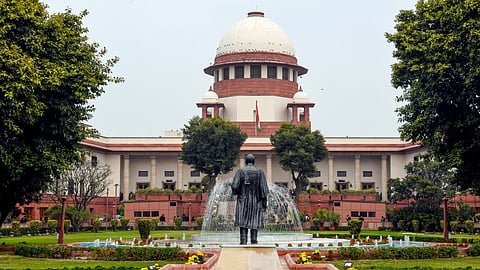

NEW DELHI: The Supreme Court on Friday barred the uploading or posting of audio and video recordings of court proceedings on social media without prior permission, saying it was necessary to prevent misuse of judicial proceedings in the digital age.
A three-judge Bench comprising Chief Justice Surya Kant and Justices Joymalya Bagchi and V Mohan passed the interim order while hearing a public interest litigation seeking safeguards against the misuse of court recordings.
The Bench directed that no extraction, modification or monetisation of recordings of court proceedings can take place without the approval of the Registrar General of the concerned High Court or the Secretary General of the Supreme Court.
Clarifying that the order was not intended to curb free speech, the court said news reporting would remain unaffected.
Justice Bagchi observed that court proceedings could not become a “24x7 entertainment channel” and said access links for virtual hearings required stricter regulation. He added that regulating digital data was “one of the biggest challenges” and noted that virtual hearing links were often shared indiscriminately. “We should ensure limited access and therefore restrict livestream itself,” he said, adding that parties should specifically request online access.
The court also issued notices to Meta, X and other social media platforms over the circulation of court videos. It said livestreaming should be treated as “an exception rather than a norm” and called for a review of the existing system.
The Bench impleaded all High Courts in the case and directed the Union government to identify nodal ministries to implement any future measures. High Courts were also asked to report on the adoption of the Supreme Court’s model livestreaming guidelines.
Senior advocate Vikas Singh, appearing for the petitioner, said he supported livestreaming but opposed its misuse.
Solicitor General Tushar Mehta backed interim protection.
