
NEW DELHI: The parliamentary standing committee on External Affairs has urged the government to progressively restore normal visa operations in Bangladesh, warning that prolonged restrictions could undermine public goodwill and people-to-people ties at a time when bilateral relations remain under strain following last year's political upheaval.
In its Action Taken Report on the Ninth Report titled Future of India-Bangladesh Relationship, tabled in the Lok Sabha on June 30, the committee, chaired by Congress MP Shashi Tharoor, expressed concern over the sharp decline in visa issuance after the security situation deteriorated in Bangladesh following the events of August 2024.
The committee said that "reduced visa processing volumes and the security-related disruptions may adversely affect public perception and impede people-to-people engagement, which is vital for fostering bilateral ties." It urged the Ministry of External Affairs, in coordination with security agencies, to "progressively normalise visa operations in Bangladesh as soon as the situation permits."
The committee also recommended the creation of a bilateral consular cooperation mechanism to periodically review visa policy, address grievances and ensure that "legitimate travellers are not subjected to various inconveniences" while maintaining necessary security safeguards.
Responding to the recommendation, the government said Bangladesh continues to be one of India's largest visa operations despite the decline in numbers after August 2024. “Close to 1,500 visas are currently being issued each day across five centres in Bangladesh, with medical visas accounting for approximately 80% of the total visas issued,” it said, adding that decisions on increasing visa issuance or reopening additional centres would depend on the evolving security situation and be taken in consultation with relevant ministries.
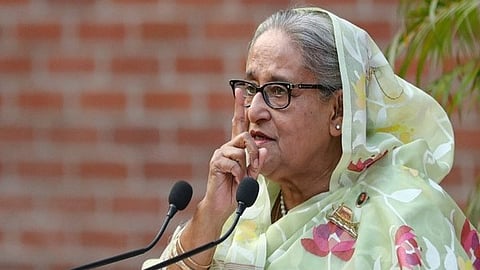
Regarding former Bangladesh Prime Minister Sheikh Hasina's stay in the country, the panel noted that India's approach was guided by its “civilisational ethos and humanitarian tradition” of offering refuge to those facing grave distress and recorded the government's assurance that Hasina had not been provided any political platform or allowed to undertake political activities from Indian territory.
The panel recommended that the government continue its “principled and humanitarian approach” while handling the matter with due sensitivity. It also took note of Bangladesh's request seeking Hasina's extradition after she was sentenced to death in absentia and asked the government to keep the committee informed about its consideration of the request.
In its response, the government said the extradition request “is being examined by the competent authorities of the Government of India in accordance with applicable law and established procedures.”
