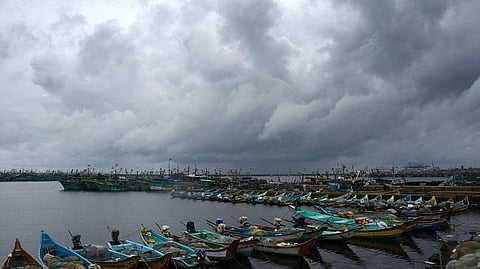

NEW DELHI: Since the official arrival of the monsoon on June 4, the country has experienced slow progress in monsoon rainfall. So far, there has been a 41% deficiency in rainfall during the first fortnight, which is impacting kharif agricultural sowing areas and reservoir levels.
The country has received only 42.6 mm of rainfall compared to the normal 72.2 mm for this period.
Earlier, IMD has predicted around below normal to deficient rainfall as the strong El Niño condition has emerged. El Niño is a natural phenomenon which warm east Pacific Ocean and synonym to weakening of the monsoon in India.
The northern limit of the monsoon has been stagnant at the Muzaffarpur district in Bihar for several days. Additionally, the Arabian Sea branch of the monsoon is not advancing, leading to a standstill in progress. Mumbai, which typically experiences rainfall on June 8, has not yet received monsoon rain.
So far, Central India has experienced a rainfall deficiency of around 63%, with the Northeastern region facing a 46% deficiency and the Southern Peninsula seeing a 21% shortfall.
Only Northwest India has received normal rainfall, with a deficiency of just 2%, thanks to the influence of Western Disturbances. The usual arrival time for the monsoon in Delhi is June 28.
Currently, 14 states, covering almost 48% of the country's geographical area, are experiencing deficient rainfall, while 24% of the area is facing significant shortfalls. Only 28% of the geographical areas have received normal to excess rainfall so far.
According to scientists at the Indian Meteorological Department (IMD), no new weather system has developed over the Arabian Sea or Bay of Bengal, contributing to this situation, which are typically seen during the monsoon season. These conditions usually facilitate the incursion of moisture-laden winds into the mainland.
Further, IMD scientists further explained that the weakening of low-level southwesterly winds and the cross-equatorial flow over the western Indian Ocean and Arabian Sea, which normally serve as moisture sources for the southwest monsoon, has been observed.
