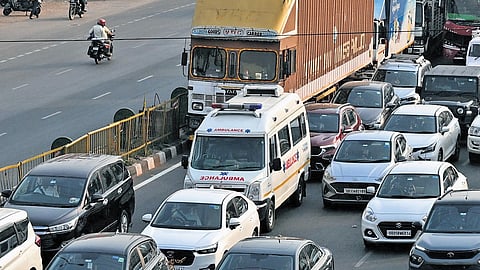

NEW DELHI: The Centre on Monday released the National Operational Guidance on National Ambulance Services 2026, which aims for ambulances to reach patients at the nearest medical centre, preferably within twenty minutes, with a target of ten minutes in busy urban areas.
Health Minister JP Nadda released the 172-page guidelines, which are the first comprehensive national framework for planning, operating, and monitoring ambulance services to ensure timely, safe, and high-quality emergency medical transport for every citizen.
Highlighting the importance of the first hour after the incident or “golden hour” which is crucial to save the life of a patient, it suggests that all district and block teams place the ambulances in accident-prone locations, highway junctions, industrial areas and busy market stretches.
The document provides a complete framework for standardising ambulance services and strengthening emergency medical transport across India. It seeks to improve quality, accessibility, efficiency and responsiveness while ensuring equal access to emergency care . The guidelines also require all ambulances to meet AIS 125 safety standards.
The guidance directs states and Union Territories to make every ambulance available through the single emergency number 112. It requires ambulances to be GPS-enabled, networked and connected through a centralised call centre for quicker coordination.
The guidelines set standards for ambulance categories, equipment, medicines, vehicle maintenance, recruitment, training, infection control, performance monitoring and grievance redressal. The framework recommends scientific ambulance deployment.
