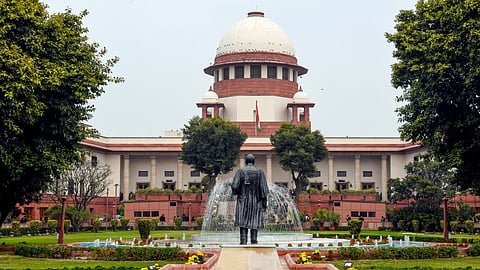

NEW DELHI: The Supreme Court on Friday issued binding directions to all 25 High Courts across the country to curb delays in delivering verdicts, invoking its powers under Article 142 of the Constitution and directing that reasoned judgments should ordinarily be delivered within three months of reserving orders.
A two-judge bench headed by Chief Justice of India Surya Kant and Justice Joymalya Bagchi said all High Courts must endeavour to pronounce reserved judgments within three months from the date orders are reserved.
The apex court also stressed greater urgency in cases involving personal liberty, directing that bail applications should preferably be heard and orders pronounced and uploaded on the same day or within 24 hours.
The directions came while hearing a petition concerning prolonged delays by the Jharkhand High Court in pronouncing judgments in criminal appeals reserved in 2022.
“Delays in the delivery of judgments can cause irreparable harm to litigants,” the bench observed, adding that timely justice is essential.
The court directed that orders on regular bail and anticipatory bail should ideally be pronounced and uploaded the same day. If reserved, such orders must be pronounced and uploaded by the next day.
It further directed that orders granting bail or suspending sentences must be communicated to jail authorities immediately, and undertrials or convicts should be released the same day or, at most, by the following day unless required in another case.
The bench also said that where only the operative portion of a judgment is pronounced, the detailed reasoned judgment must be uploaded within seven days, extendable up to a maximum of 15 days. All judgments, it added, must be uploaded on High Court websites within 24 hours.
“HC websites must show when judgment was reserved and when uploaded. Automatic alerts must be sent every month regarding pending reserved judgments,” the bench said.
The court further directed that if a judgment is not delivered within three months, the Registrar General must place the matter before the Chief Justice of the concerned High Court. If the judgment is still not delivered within two additional weeks, the Chief Justice may transfer the matter to another bench.
The apex court clarified that the date on which the operative portion is pronounced will be treated as the official date of judgment.
Observing that High Courts are the first point of access to justice for thousands of litigants daily, the bench said delays directly affect public confidence in the judicial system.
The court also clarified that the directions were not intended to cast aspersions on any judge or institution but were aimed at addressing systemic delays. It said the guidelines are binding and must be followed scrupulously by all High Courts.
