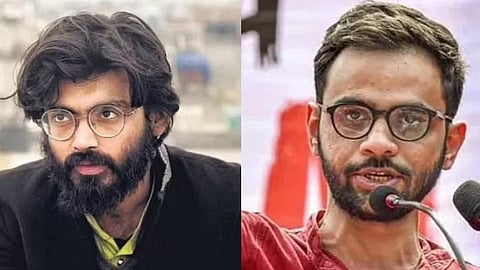

NEW DELHI: The Supreme Court is slated to hear the bail pleas of student activists Sharjeel Imam and Umar Khalid on Wednesday in the alleged larger conspiracy behind the February 2020 riots in northeast Delhi.
A three-judge Bench comprising Chief Justice of India Surya Kant and Justices Joymalya Bagchi and V Mohana is likely to hear the bail pleas on Wednesday. Their earlier bail pleas were rejected by a bench headed by Justice Aravind Kumar, prompting them to approach the top court again on November 5.
The Delhi High Court had earlier denied bail to Imam and other accused, holding that there was prima facie evidence of their involvement in the conspiracy. Following this, Imam moved the Supreme Court seeking relief.
Imam has contended that the HC order suffers from serious legal errors. He said the court failed to apply the correct test for granting bail under the UAPA and mechanically accepted the prosecution's case.
He argued that his speeches at Jamia Millia Islamia and Shaheen Bagh were part of democratic protest and did not amount to incitement to violence.
The plea also cites delay, stating that he has been in jail for over five years and the trial has not progressed, violating his fundamental right to a speedy trial.
The police case is that the accused hatched a conspiracy to engineer riots in northeast Delhi to coincide with the visit of the then US President and to defame India internationally.
Imam has been named as one of the main conspirators. The police have alleged that his speeches were aimed at creating a sense of fear and communal divide.
Imam has denied the charges, saying the case against him is based on a selective reading of his speeches.
